
Your Customer Messaging Is Quietly Losing You Sales
A customer finds you on Instagram. They ask a simple question about pricing, maybe with a "hi, is this still available?" and a little heart emoji. No reply comes. An hour passes, then two. So they hop over to WhatsApp, figure they will try there instead. This time someone answers, but it is a different person who has no idea about the earlier conversation, and the answer they give does not quite match what your Instagram bio promised. The customer squints at the mismatch, decides it is not worth the effort, and closes the app.That there is poor customer messaging!
You never saw a lost sale. You saw a person who "went cold."
That silence gets filed under lost interest almost every time. The truth is usually less flattering and more fixable: they were not bored, they were worn out. Your product was fine. Your customer messaging was the thing that quietly pushed them out the door.
The three ways you leak customers without noticing
Most businesses assume they lose deals on price or features. In my experience the leaks happen somewhere much less dramatic, in the gap between a message being sent and a useful reply coming back.
Nobody owns the conversation. When five channels feed into five different phones and inboxes, a message belongs to everyone and therefore to no one. Someone assumes a teammate already replied. The teammate assumes the same thing. The customer sits in the middle of that assumption, waiting. This is not laziness. It is the predictable result of having no single place where a conversation clearly belongs to one human.
Messages sit overnight because nobody covers the hours. A lead sends a question at 9:40 pm. Your team clocked out at 6. By the time anyone sees it at 9 the next morning, the customer has already messaged two competitors and booked with whoever replied first. Response time is not a nice-to-have. Research from Harvard Business Review found that companies responding to a lead within an hour were roughly seven times more likely to have a meaningful conversation than those who waited even sixty minutes longer. Overnight silence is not neutral. It actively hands the sale to someone else.
The thread dies the moment a channel changes. This is the sneakiest one. A customer starts on Facebook, follows up by email, then sends a WhatsApp voice note. To them it is one continuous conversation. To your team it is three unrelated fragments handled by three people, none of whom can see the full picture. So the customer repeats themselves, gets asked a question they already answered, and starts to feel like they are talking to a wall with several mouths.
Is poor Customer messaging a systems problem or a people problem?
Here is the part worth sitting with. None of those failures mean you hired the wrong people or skipped training. You can hire the friendliest, sharpest team on earth and still lose customers to all three of the above, because the problem lives in how the information moves, not in how hard anyone is trying.
When your conversations are scattered across separate apps, you are asking humans to do the job a system should do: remember who said what, on which channel, and who is responsible for replying next. People are bad at that. Software is good at it. Trying to fix a structural gap with a pep talk or another "please check your messages" reminder is like mopping a floor while the tap is still running.
So the fix is not more effort. It is putting every conversation in one place where ownership, coverage, and context are handled by design.
What that actually looks like with Vira.chat
This is where a proper customer communication platform earns its keep. Vira.chat was built around one plain idea: every message a customer sends, no matter the channel, should land in the same organized space where your team can see it, own it, and answer it without losing the thread. A way of improving your customer messaging and response rate across all platforms.
Let me walk through the parts that matter.
One inbox for all five channels

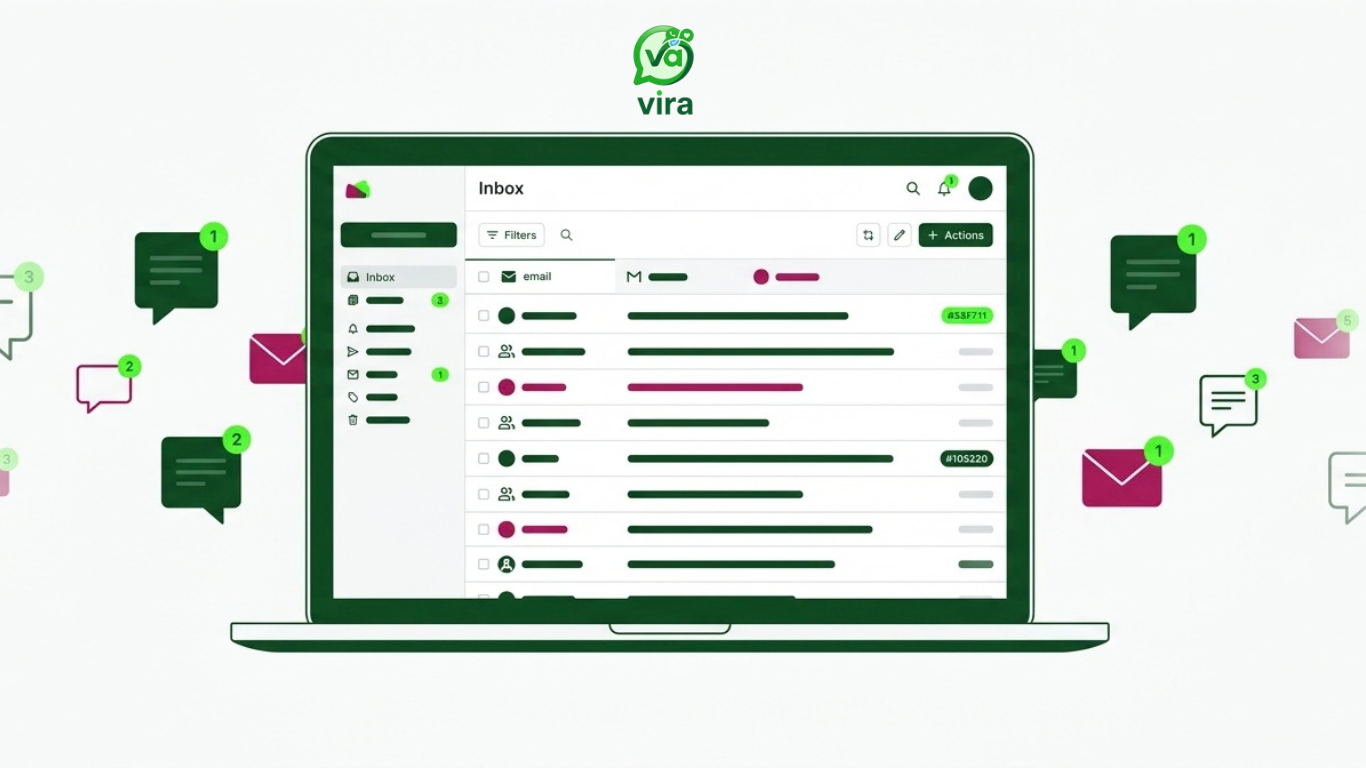
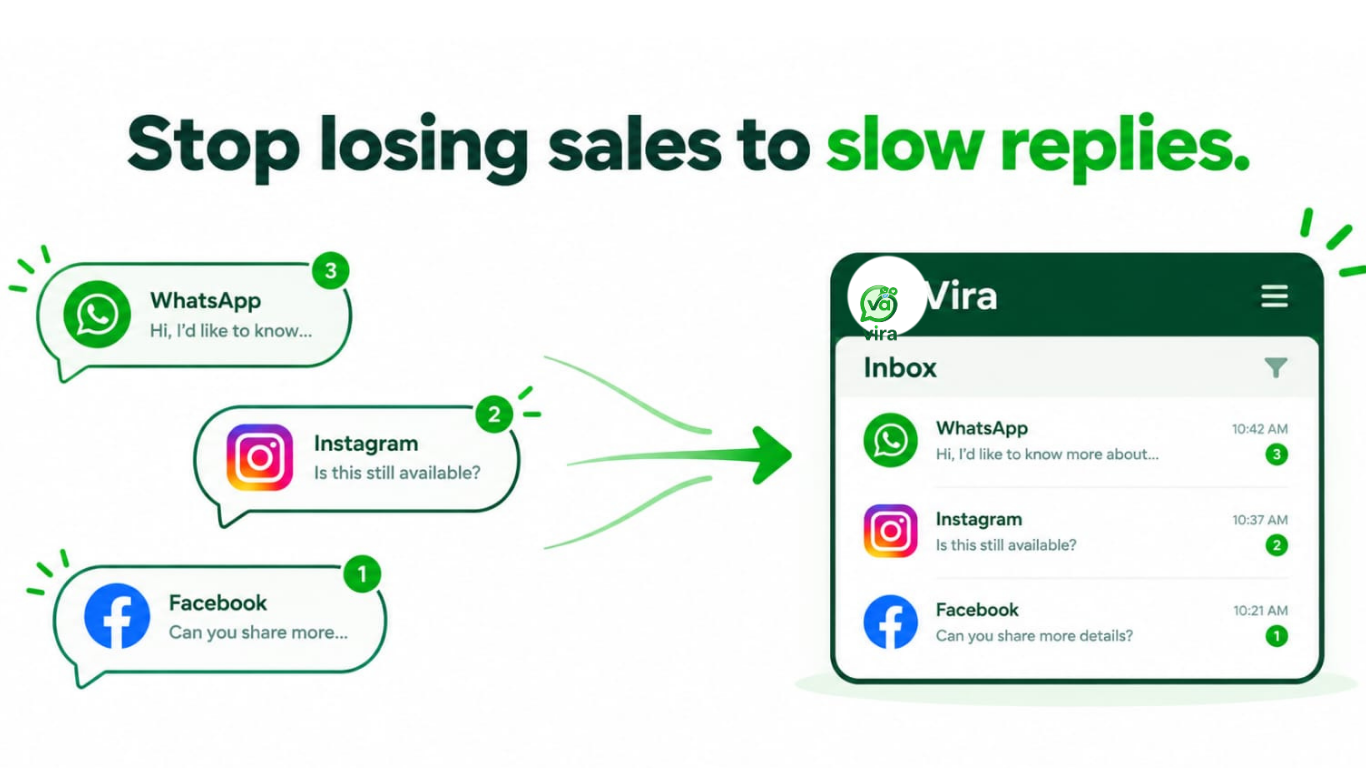
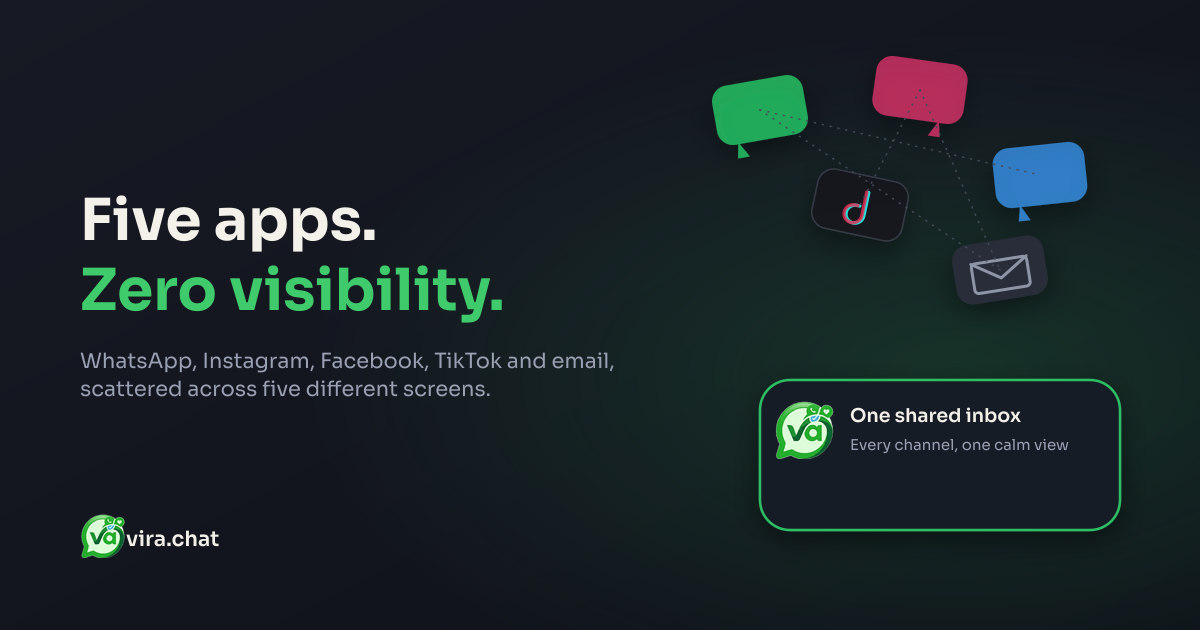
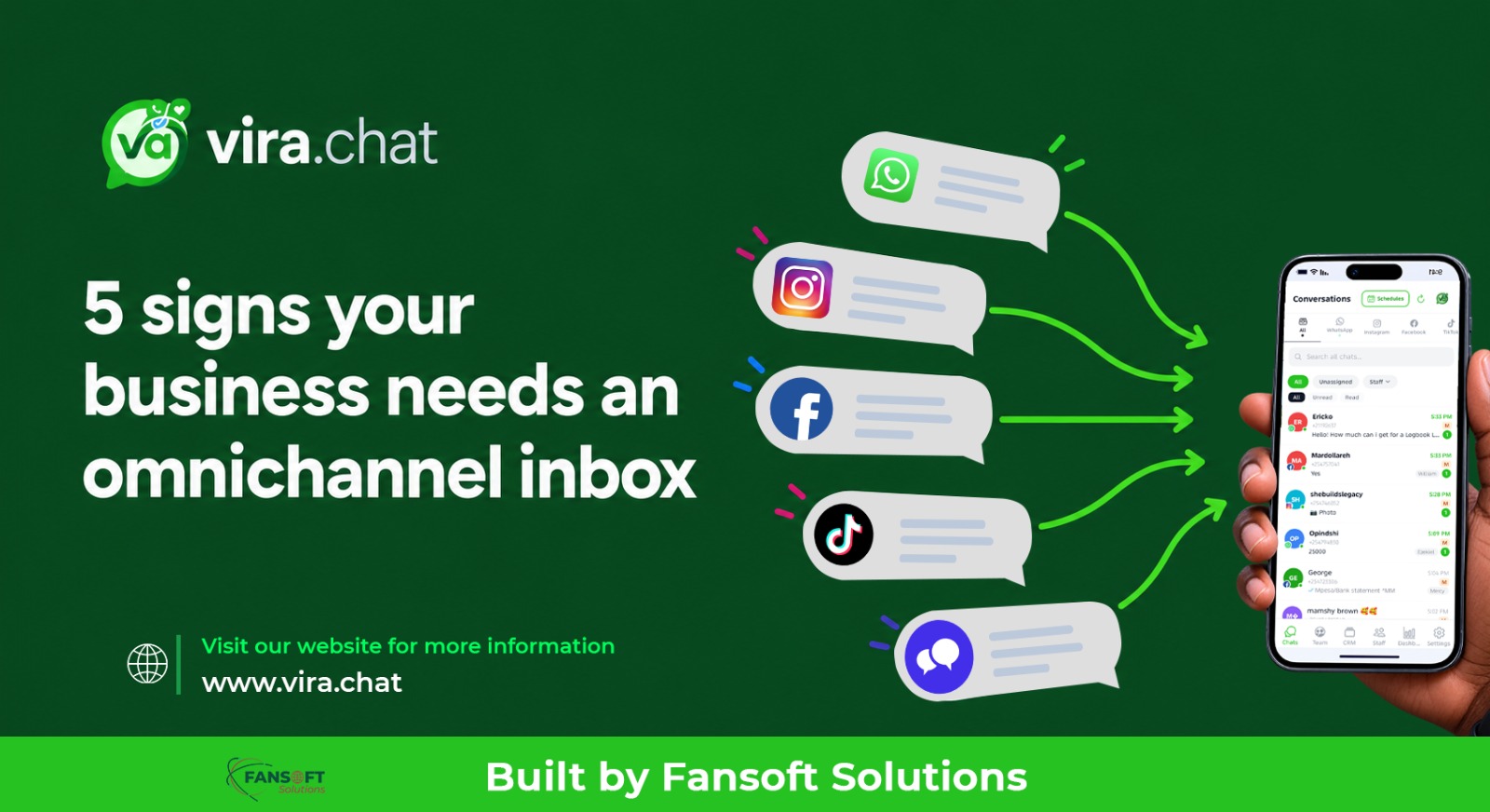
Instagram, Facebook Messenger, WhatsApp, and your website chat all pour into a single unified inbox. That WhatsApp voice note and the earlier Instagram DM sit side by side under the same customer, so when someone switches channels, the conversation follows them instead of splintering. A multi channel inbox for small business teams is the difference between "let me check who spoke to you last" and simply reading the history that is already there.
Four routing modes so nobody gets dropped
Ownership stops being a guessing game when the system assigns it. Vira.chat's conversation routing software gives you four ways to hand out incoming chats: Round Robin, which distributes conversations evenly across your available staff, Manual, where an admin assigns each conversation directly, Keyword, which routes a conversation to the right department based on what the customer typed in their first message, or Keyword plus Round Robin, which sends it to the right department first, then distributes it evenly among that department's staff. Pick the mode that fits how your team actually works, and the 'I thought you had it' problem disappears because the software decided who has it.
Canned replies and AI auto-reply for the overnight gap
The common questions, hours, location, "do you ship here", pricing tiers, do not need a human at midnight. Canned replies let your team fire off polished answers in one click, and the AI auto-reply can handle the predictable stuff after hours so a 9:40 pm question gets a real response instead of a nine-hour void. That coverage is often what keeps a warm lead warm until a human picks it up in the morning.
Lead tracking that connects to your ad spend
If you run Meta Ads, you already know the frustration of watching money go out without seeing which clicks turned into conversations. Vira.chat's lead tracking software syncs with your Meta Ads so you can see which campaign a message came from and follow that lead from first hello to closed sale. Good lead tracking is what turns "we got some messages this week" into "this ad set brought in eleven leads and four of them bought."
A shared team inbox with a supervisor view
Everyone on your team works out of the same shared space, so context is never trapped on one person's phone. The team inbox for customer support includes a supervisor tab, which means a manager can watch conversations in progress, spot a chat stalling, and step in before a customer gives up. It is quality control without hovering over shoulders.
A widget for your website and setup that does not eat your week
Drop the embeddable chat widget onto your site and website visitors become part of the same flow as everyone messaging you on social. Setup is quick, with dashboards that show what is actually happening and role-based access so your part-time weekend helper does not have the same permissions as your ops lead. You are running inside a day, not staring at a three-week onboarding checklist.
If you want to go deeper on any of this, the piece on choosing the right conversation routing setup breaks down when each routing mode makes sense, and the features overview lays out how the channels connect. For a broader take on why fast replies move revenue, Zendesk's research on customer experience is worth a read.
Ask a better question the next time a lead goes quiet
Next time someone stops replying and the easy story is "guess they were not interested," pause and ask a different diagnostic question instead: did we ever actually make it easy for this person to keep talking to us?
Did their message land somewhere a human would see it? Did it get owned by one person, or did it float? When they moved from Instagram to WhatsApp, did the conversation move with them, or did they have to start over with a stranger? Did their late-night question get any response at all before morning?
More often than not, the honest answer to at least one of those is no. And that no, not the price and not the product, is what cost you the sale.
Fixing your customer messaging will not make every lead convert. But it will stop you from losing the ones who genuinely wanted to buy and simply got tired of chasing you for the chance. That is a bigger number than most business owners want to admit.
If you want to see what your conversations look like when they all live in one place, reach out for more info or book a quick demo. Bring your messiest week of scattered messages. That is exactly the mess this is built to clean up.