
November 4, 2026 · CHARITY
Customer Communication Platform: Track Leads Won or Lost
A customer communication platform should track leads where they start. See how Vira’s built-in CRM marks leads won or lost in chat.
Here's a number that should bother anyone running a sales team: most of your best leads never make it into your CRM at all. They show up as a quick "Is this still available?" on WhatsApp, a DM on Instagram, a reply to a Meta ad. Someone answers, the chat moves on, and the lead quietly evaporates. Nobody meant for it to happen. It just did.
That gap between where a conversation starts and where you actually record it is where money goes missing. A customer communication platform that keeps lead tracking inside the conversation closes that gap. This post walks through how Vira's built-in CRM marks leads won or lost right where the chat happens, so you can finally see which messages turned into sales and which ones slipped through.
Why leads get lost between the inbox and the spreadsheet
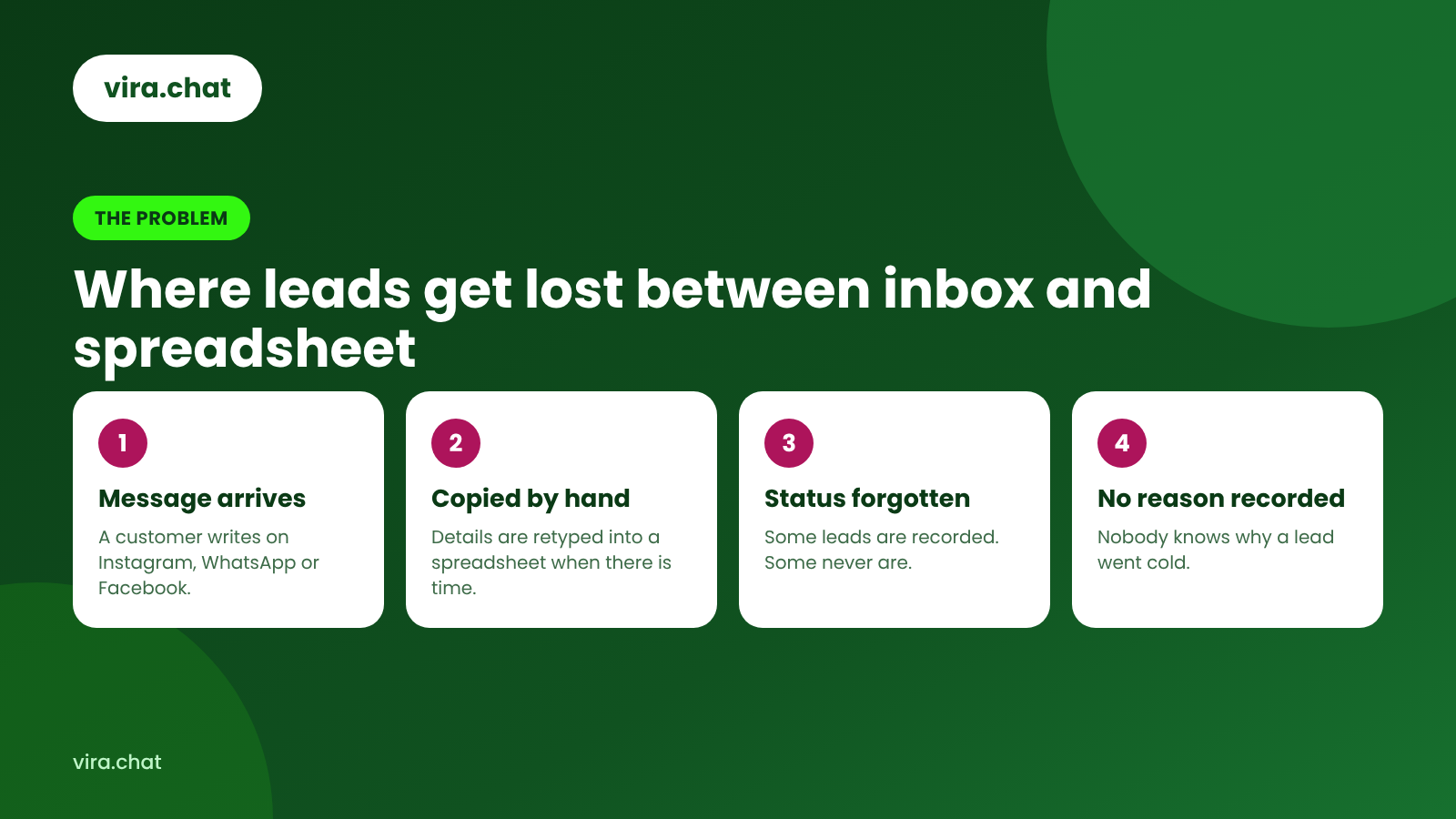
Picture a normal Tuesday. A customer asks about a product on Instagram. Your agent replies, answers two follow-up questions, quotes a price, and promises to check stock. Then three more chats come in. The plan was to copy that person's name and number into the sales spreadsheet "later." Later never comes.
This is the quiet leak in most businesses. Some leads get written down, most do not. And almost nobody records why a lead went cold. Was the price too high? Did the customer ghost after you asked for a deposit? Did the follow-up message get forgotten?
A month later, you can pull up your inbox and count how many messages arrived. What you cannot tell is how many of those became paying customers, or which ad brought the ones that did. You are measuring activity, not results. That's an expensive blind spot, especially if you're spending Ksh 50,000 a month on ads and have no idea which conversations they actually produced.
The problem isn't that your team is lazy. It's that the tool for talking to customers and the tool for tracking them are two different places. Every switch between them is a chance to lose something.
What a customer communication platform with a built-in CRM actually does
A customer communication platform with a built-in CRM pulls every customer message into one shared inbox and lets your team track each lead inside that same conversation. Instead of copying details into a separate tool, you capture the lead, update its status, and record the outcome from the chat itself. One place for the conversation, one place for the record, and they're the same place.
That last part matters more than it sounds. When unified inbox software also holds your lead data, there's no retyping, no second window, no "I'll do it later." The friction that causes leads to go unrecorded just disappears, because recording the lead is part of replying to it.
Vira works this way on purpose. It's a unified inbox and customer messaging tool with a built-in CRM, and a Verified Tech Provider by Meta, which means the connection to channels like WhatsApp and Instagram is official rather than a workaround.
How to track a lead in Vira, step by step
The whole point is that this fits into how your team already works. Nobody has to stop and "do admin." Here's the flow.
1. Capture the lead from the chat
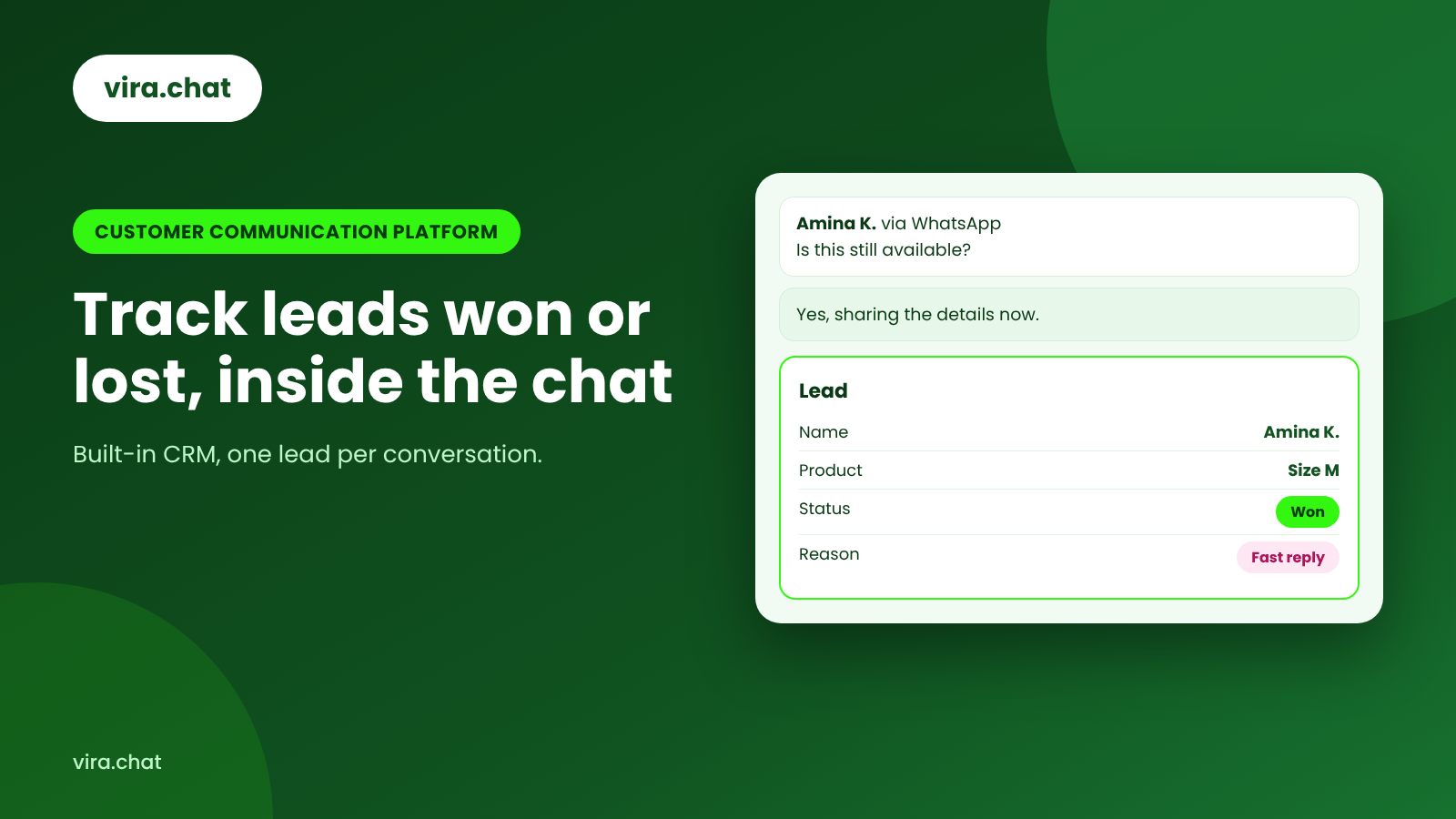
When a conversation looks like a real opportunity, you turn it into a lead without leaving the thread. Name, phone, email, the product they asked about, and a status: all of it updates straight from the chat menu. There's one lead per conversation, so you never end up with three half-filled records for the same person.
It works across every channel you connect, too. A lead from a WhatsApp enquiry and a lead from an Instagram DM live in the same system with the same fields. Your pipeline stops being scattered across apps.
2. Mark it won or lost, with a reason
This is the step most teams skip, and it's the one that teaches you the most. When a deal closes, you mark the lead won. When it dies, you mark it lost, and you note why.
Over a few weeks those reasons start telling a story. Maybe a third of your lost leads say "price," which means your quote or your packaging needs a look. Maybe half say "no response after follow-up," which means your reminders are going out too slowly, or not at all. You can't fix what you never wrote down. Recording the reason turns a lost sale from a shrug into a lesson.
Winning leads matter here too. When you can see which products close fastest and which channels bring buyers rather than browsers, you stop guessing about where to put your energy.
3. Feed the results back to Meta
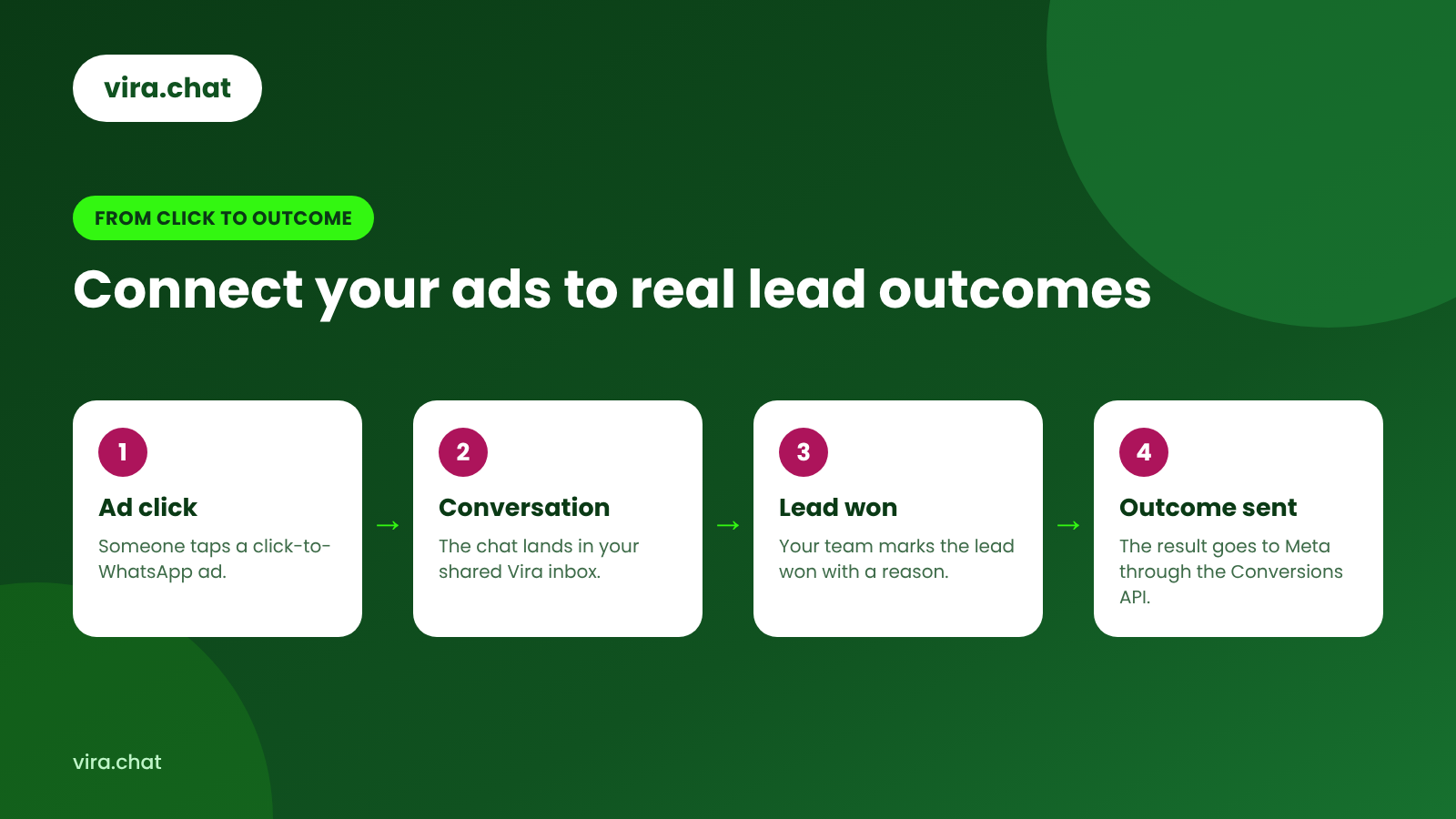
If you run click-to-WhatsApp ad campaigns, this is where it gets genuinely useful. When a lead is marked won or lost, that outcome can be sent back to Meta. So Meta isn't just optimising for "people who clicked" or "people who messaged." It's learning which conversations actually became sales.
That changes what the ad engine goes looking for. Instead of chasing cheap clicks that never buy, it starts finding more people who look like your real customers. You're training the system with proof, not just activity. Meta's own documentation on conversion tracking and offline events explains why this kind of real-outcome feedback produces better results than relying on clicks alone.
The practical effect: your ad spend works harder because it's being judged on sales, not on noise.
What this looks like a month in
Say you connect your channels and start capturing leads properly on day one. By the end of the month, instead of a vague sense that "WhatsApp is busy," you can answer real questions.
How many enquiries turned into customers, and what that conversion rate actually is.
Which channel, Instagram, WhatsApp, Facebook, produces leads that buy versus ones that fizzle.
The top three reasons deals are being lost, in your customers' own words.
Which products get asked about a lot but rarely close, so you can fix the pitch or the price.
None of that requires a data analyst or a separate reporting tool. It's a side effect of handling your customer messaging and your lead tracking in the same place. The record builds itself as your team does its normal job.
I'll be blunt about my view here: if you're running sales through chat and you're still copying leads into a spreadsheet by hand, you are losing deals you'll never even know about. Not because your team is bad at follow-up, but because the system is asking them to do two jobs at once and switch tools to do it. Remove the switch and the leaks mostly close on their own.
The case for keeping it all in one place
There's a reason businesses end up with a drawer full of disconnected tools. You start with a messaging app, add a spreadsheet, maybe bolt on a standalone CRM later, and each piece made sense on its own. Stitched together, though, they create exactly the gaps we've been talking about. Every handoff between tools is a dropped-lead risk.
A single customer communication platform that owns both the conversation and the record removes those handoffs. Your agents reply and tag in the same screen. Your manager sees a real pipeline instead of a guess. And your ads learn from actual outcomes. The value isn't any one feature. It's that nothing falls between the cracks, because there are no cracks.
That's the whole idea behind zero dropped leads. Not more hustle, not more reminders taped to monitors, just a setup where recording a lead is baked into talking to one.
If you want to see how the lead tracking fits inside the chat, including the won and lost reasons and how outcomes flow back to Meta, Vira has built-in CRM and look at the lead view for yourself. The difference between "we got a lot of messages" and "we know exactly what those messages were worth" usually comes down to this one thing: where you keep the record. Keep it in the conversation, and you stop losing track of the leads that matter.