
September 26, 2026 · CHARITY
What Does "Unified Inbox" Mean for Businesses
Here's what a unified inbox actually means. Stop juggling WhatsApp, Instagram, and Facebook messages in separate tabs is slowing your team down.
Picture a Nairobi boutique on a busy Saturday. Orders are coming in through WhatsApp, someone's asking about sizing on Instagram, and a returning customer just left a comment on Facebook wondering if their delivery went out. Three phones. Three tabs. One very tired person trying to remember who they've already replied to. If that sounds familiar, then a unified inbox is the thing you've been missing without knowing its name.
Let me explain what it actually means, why it matters more than it sounds, and how it changes the way a small team handles customers.
What a unified inbox actually is
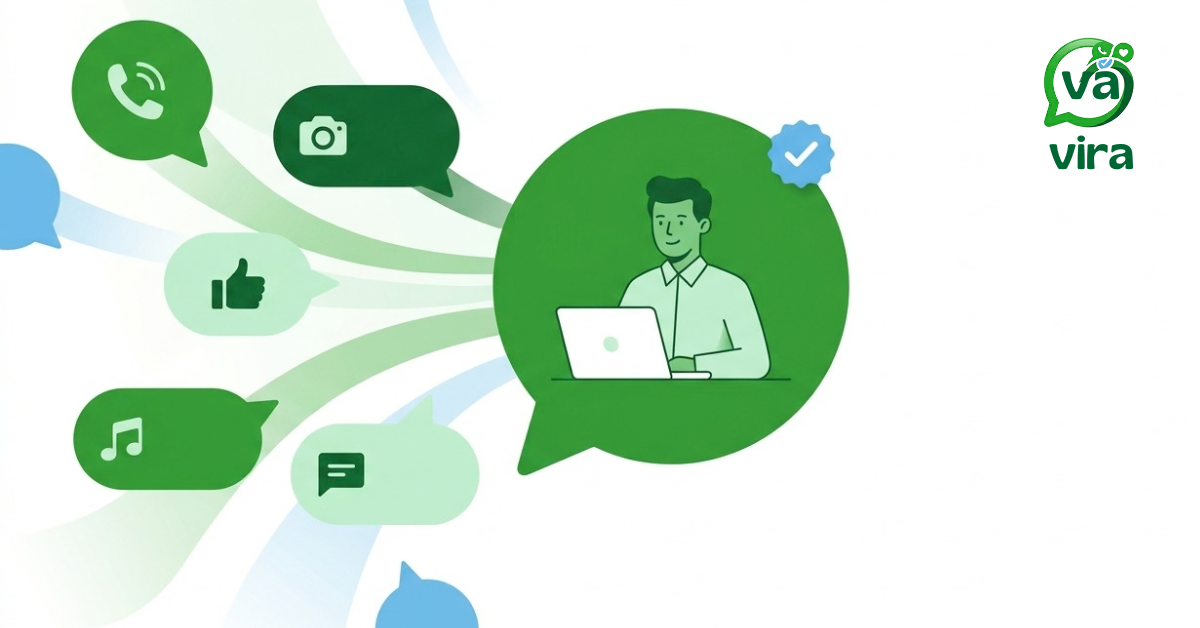
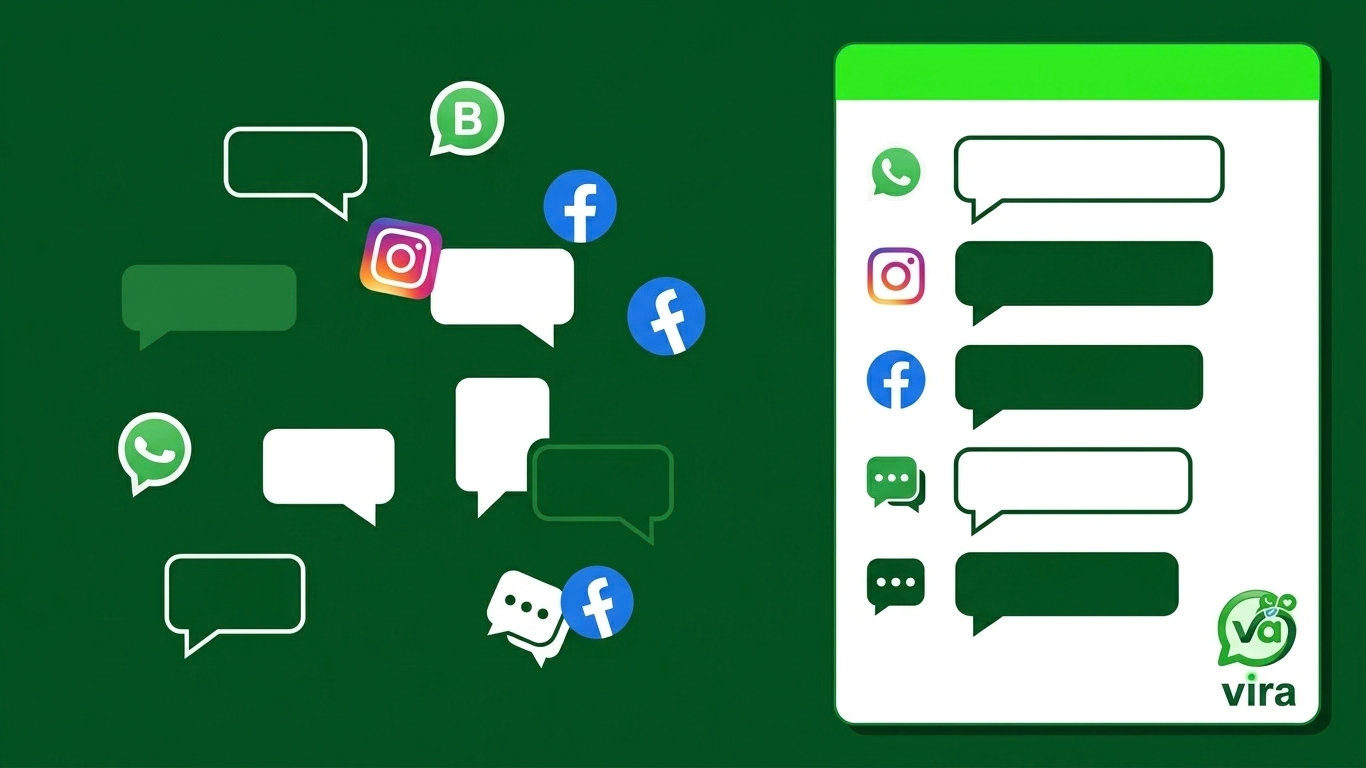
A unified inbox pulls every customer conversation, from WhatsApp, Instagram, Facebook, and other channels, into a single screen. Instead of hopping between apps, you see one continuous list of messages, no matter where the customer sent them from.
Think of it like your email. When someone emails you, you don't care whether they used Gmail or Outlook to send it. It just arrives in your inbox and you reply. A unified inbox does the same thing for social and chat messages. A question on Instagram and a follow-up on WhatsApp both land in the same place, ready for your team to answer.
That's the whole idea at its core. One place, all your conversations. But the "one place" part is doing a lot of heavy lifting, and it's worth unpacking why.
Why having all the apps open isn't the same thing
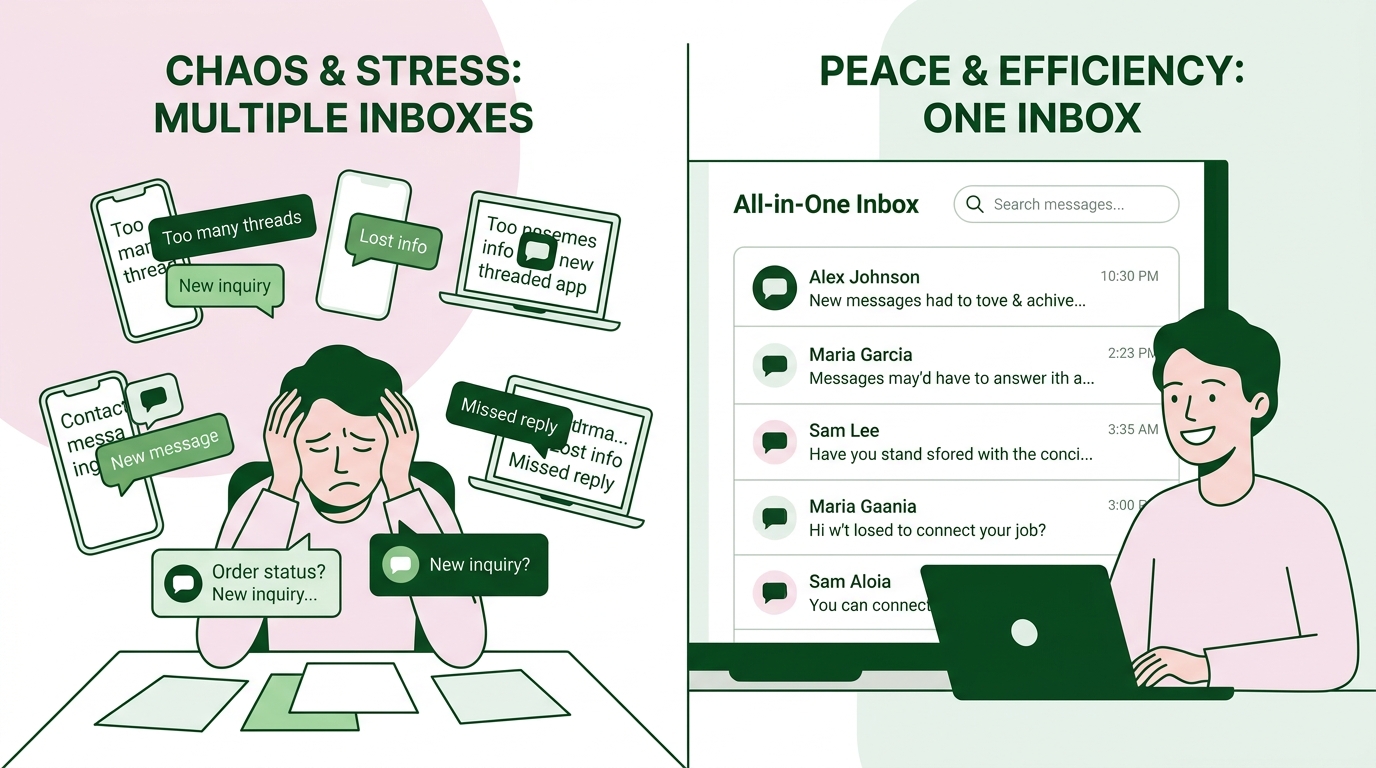
Here's where people get confused. "I already have WhatsApp, Instagram, and Messenger open on my phone," a business owner might say. "Isn't that the same as a unified inbox?"
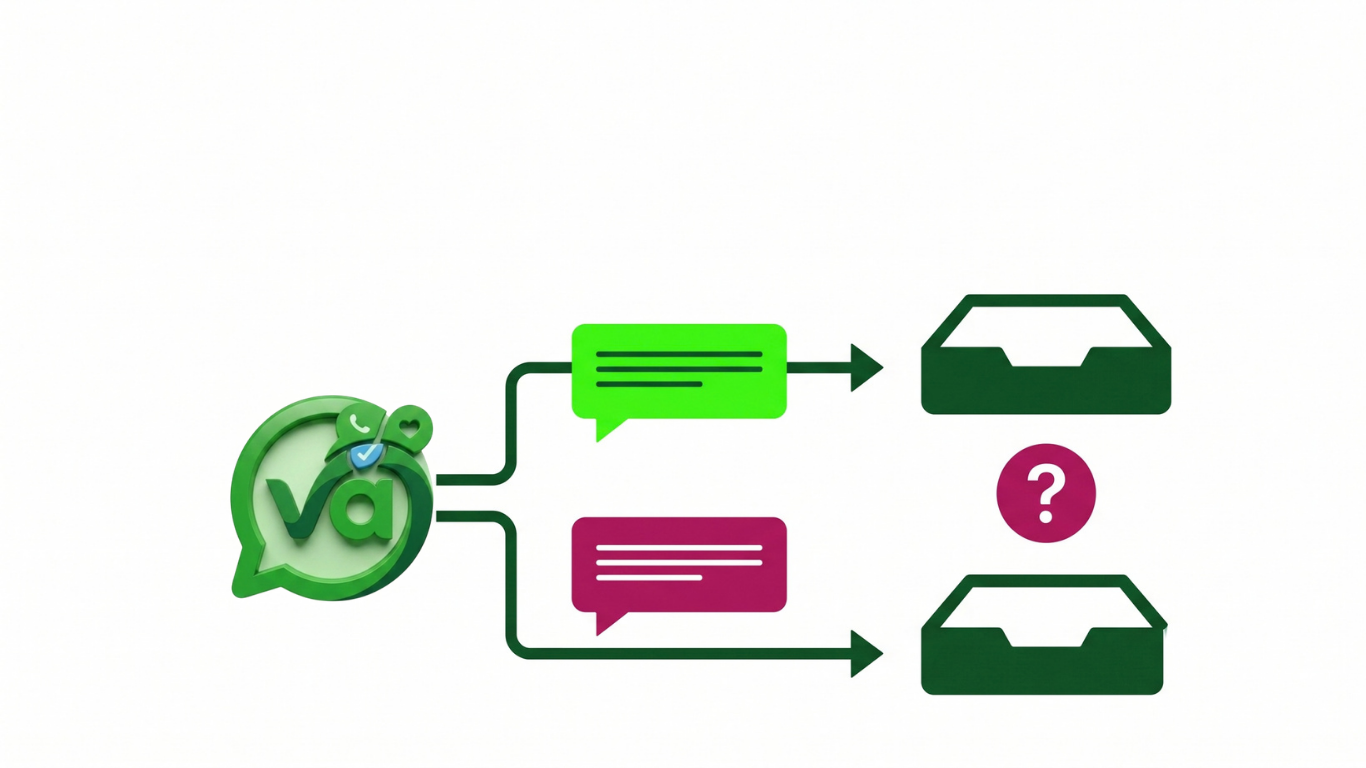
Not even close. Having multiple apps open is like having five separate notebooks on your desk. You still have to pick up the right one, flip to the right page, and hope you didn't miss anything in the other four. There's no shared record. No one else on your team can see what you saw. And when a customer messages you on Instagram today and WhatsApp next week, those two conversations live in completely different places with no connection between them.
A real unified inbox stitches those threads together. It knows that the person asking about a product on Instagram is the same person who ordered last month on WhatsApp. It gives your whole team the same view, so no message slips through the cracks because someone was off that day.
The difference shows up in the numbers. A shop juggling three apps manually might lose a chunk of enquiries simply because a message got buried while someone was answering a different channel. Pull everything into one screen and those "sorry, we missed your message" moments start to disappear.
Why this matters for growing businesses in Kenya
When you're a one-person operation, you can just about manage. You're fast, you know your customers, and you catch most things. But growth breaks that system quickly.
Say you go from 20 messages a day to 200. Now you've hired two people to help. Suddenly the questions pile up:
Who's replying to the Instagram DMs?
Did anyone answer that WhatsApp order from this morning?
Why did two of us reply to the same customer with different prices?
This is the exact moment most Kenyan SMEs feel the strain. The tools that got you here, a phone and a lot of hustle, can't keep up. That's why the shift toward proper customer messaging platforms built for teams isn't a luxury anymore. It's what keeps a growing business from drowning in its own success.
There's also a practical reason tied to WhatsApp itself. If you're using WhatsApp Business at any real volume, response time matters, slow replies cost you sales and can even affect how you're allowed to message customers. A unified inbox helps you answer faster because you're not wasting time app-switching.
Unified inbox vs. omnichannel: what's the difference?
You'll hear these two terms used almost interchangeably, and that's part of the confusion. They're related, but they're not the same thing.
A unified inbox is about where your team works. It's the single screen where all incoming messages arrive. It solves the internal problem, your staff no longer bounce between apps.
Omnichannel is a broader idea about the customer's experience. A true omnichannel customer service setup means a customer can start a conversation on Instagram, continue it on WhatsApp, and get help over email, and the experience feels seamless the whole way, because the business remembers the full history regardless of channel.
Here's the simplest way to think about it: a unified inbox is the tool that makes omnichannel possible. You can't deliver a smooth cross-channel experience if your team can't see the full picture. Get the inbox right first, and the omnichannel experience follows.
Most small businesses don't need to obsess over the buzzwords. What they need is to stop losing messages and reply faster. A unified inbox delivers that directly.
Where the real value hides: routing and lead tracking
A basic unified inbox that just dumps everything into one list is helpful. But the version that actually moves the needle does more than collect messages. It organizes them.
Smart routing decides who handles what. Instead of everyone seeing everything and stepping on each other, messages get sent to the right person automatically. Sales enquiries go to your sales rep. Delivery questions go to whoever handles logistics. A new customer gets picked up by someone who's free, while a returning one goes back to the person they spoke to last time. No one has to manually sort or shout across the room, "Who's got this one?"
Lead tracking is the part most people underestimate. Every message is a potential sale, but without tracking, those leads leak away. A good system tags where each conversation stands: new enquiry, following up, ready to buy, closed. So when you look at your inbox, you're not just seeing chats, you're seeing a pipeline. You know exactly which customers need a nudge and which are about to buy.
Put those two together and the inbox stops being a place where messages just sit. It becomes something closer to a sales engine. You reply faster, you follow up on the right people, and nothing gets forgotten.
How Vira fits in
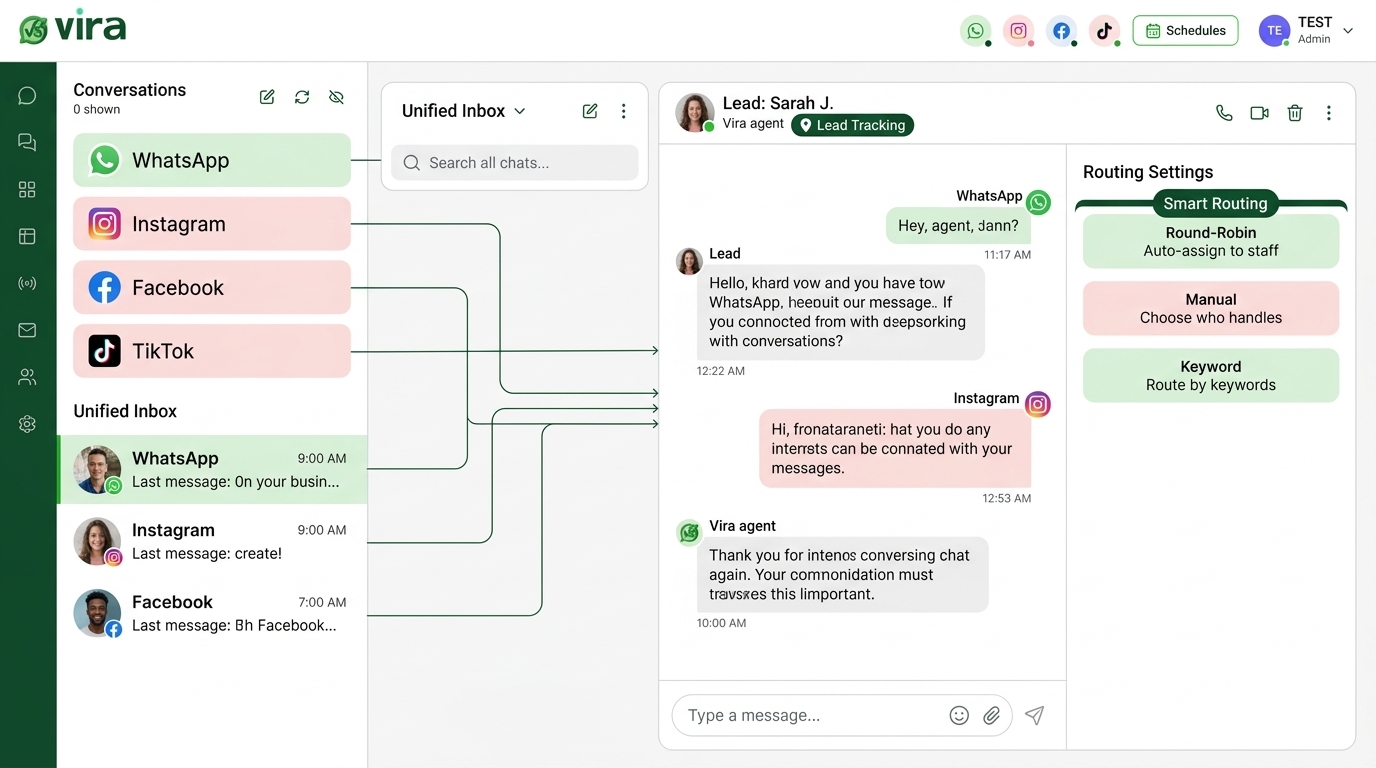
Everything I've described, one screen for every channel, smart routing, lead tracking, a shared view for your whole team, is exactly what Vira.chat was built to do.
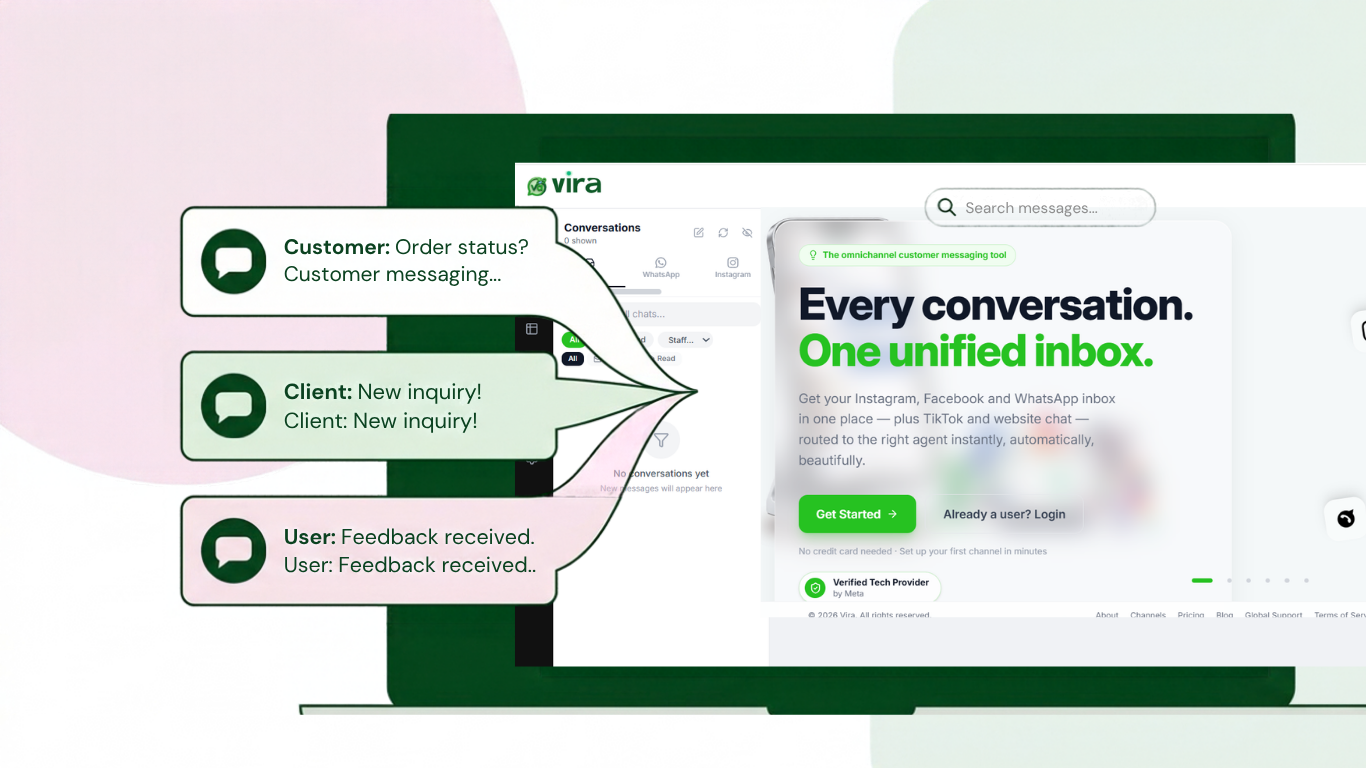
Vira gives you your Instagram, Facebook, and WhatsApp inbox in one place, so your team stops switching between apps and starts answering customers from a single dashboard. Messages route to the right person automatically. Every lead is tracked so you can see who's ready to buy and who needs a follow-up. And because it's designed with growing Kenyan businesses in mind, it fits the way local teams actually work, not some abstract idea of a "team" from a Silicon Valley pitch deck.
The point isn't the technology for its own sake. The point is that you stop losing sales to slow replies and missed messages. That's the whole reason a unified inbox exists.
The takeaway
A unified inbox is a simple idea with a big payoff: bring every customer conversation into one place so your team can actually keep up. It's not the same as having all your apps open, and it's the foundation that makes true omnichannel service possible.
If you're at the stage where messages are outrunning your ability to answer them, that's not a sign you're failing. It's a sign you've grown past the old way of doing things. The fix isn't working harder or buying another phone. It's getting the right system in place before the strain turns into lost customers.
Start by looking at how many messages slipped through last week. If the number bothers you, you already know what to do next.