
Stop Losing Sales: Why You Need a Unified Inbox
Someone finds your business on Instagram at 9 a.m. They like what they see, so they send a DM asking if you have a product in stock. Simple question. Easy sale. But that message lands in an inbox nobody's watching, because your team lives in WhatsApp and one person handles Facebook when they remember to. By the time anyone notices, it's 2 p.m., the customer already messaged three other shops, and one of them replied in four minutes. Guess who got the money. A unified inbox is usually the difference between catching that sale and losing it.
The Real Price of a Slow Reply
There's a well-known piece of research out of MIT and Harvard Business Review that put numbers on something most business owners feel but never measure. Companies that responded to a lead within an hour were far more likely to have a meaningful conversation than those that waited even a little longer. Wait five hours, and the odds drop off a cliff. Wait a full day, and you're mostly talking to yourself.
The uncomfortable part is that "we'll get back to you" often means "we forgot." And on messaging apps, forgetting has a cost you can't undo. WhatsApp, for example, only lets you message a customer freely inside a 24-hour window after they reach out. Miss it, and you're stuck jumping through hoops to reopen the conversation. We wrote more about that in our post on the 24-hour response rule, because it's one of those mechanics that quietly punishes slow teams without anyone realizing why sales feel harder than they should.
Speed isn't a nice-to-have here. It's the whole game.
Where Sales Enquiries Actually Get Lost
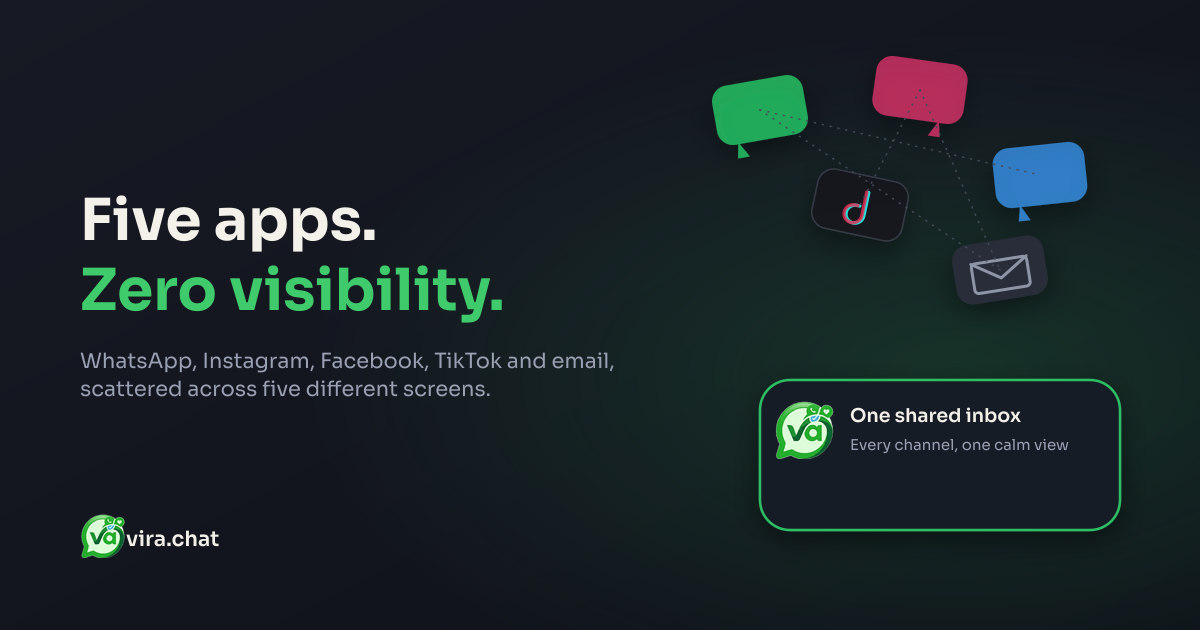
Here's the thing nobody wants to admit: your team probably isn't lazy. The problem is that your enquiries are scattered across four or five apps, and no single person can see all of them at once.
Think about how it actually plays out. A question comes into Instagram. A price request lands in Messenger. A returning customer pings WhatsApp. Someone comments on a Facebook post. Each of those lives in its own app, on its own phone, behind its own login. Nobody has a full picture, so things fall through the cracks constantly. That's not a discipline issue. It's a structure issue, and good customer messaging breaks down the moment you try to run it across too many disconnected windows.
This is why patching it with "everyone just check your notifications more" never sticks. The Hospitality Net team made a similar point about sales enquiry management, arguing that when enquiries slip away, it's almost always a commercial-strategy and systems gap, not a people gap. Ask staff to try harder inside a broken setup and you'll get a few good weeks followed by the same old chaos.
Proper Lead Tracking only works when every enquiry lands somewhere you can actually see it, tag it, and follow up on it. If a lead can vanish just because someone was on lunch, you don't have a tracking system. You have hope.
Multichannel vs Omnichannel Customer Experience
People throw these two terms around like they're the same thing. They're not, and the difference matters.
Being multichannel just means you're present in a lot of places. You've got WhatsApp, Instagram, Facebook, maybe a live chat on your website. That sounds good on paper. But if each of those channels operates on its own island, the customer feels it. They ask a question on Instagram, get told to "message us on WhatsApp," repeat themselves, and start to wonder if you've got your act together.
Omnichannel is when all of those channels feed into one connected experience. The customer moves from Instagram to WhatsApp and nobody makes them start over, because your team sees the whole conversation in one place. The Multichannel vs Omnichannel customer experience gap is basically the difference between having lots of doors and having one welcoming room. Most small businesses in Kenya are multichannel by accident. Very few are omnichannel on purpose. That gap is where sales quietly leak out.
What a Unified Inbox Actually Fixes
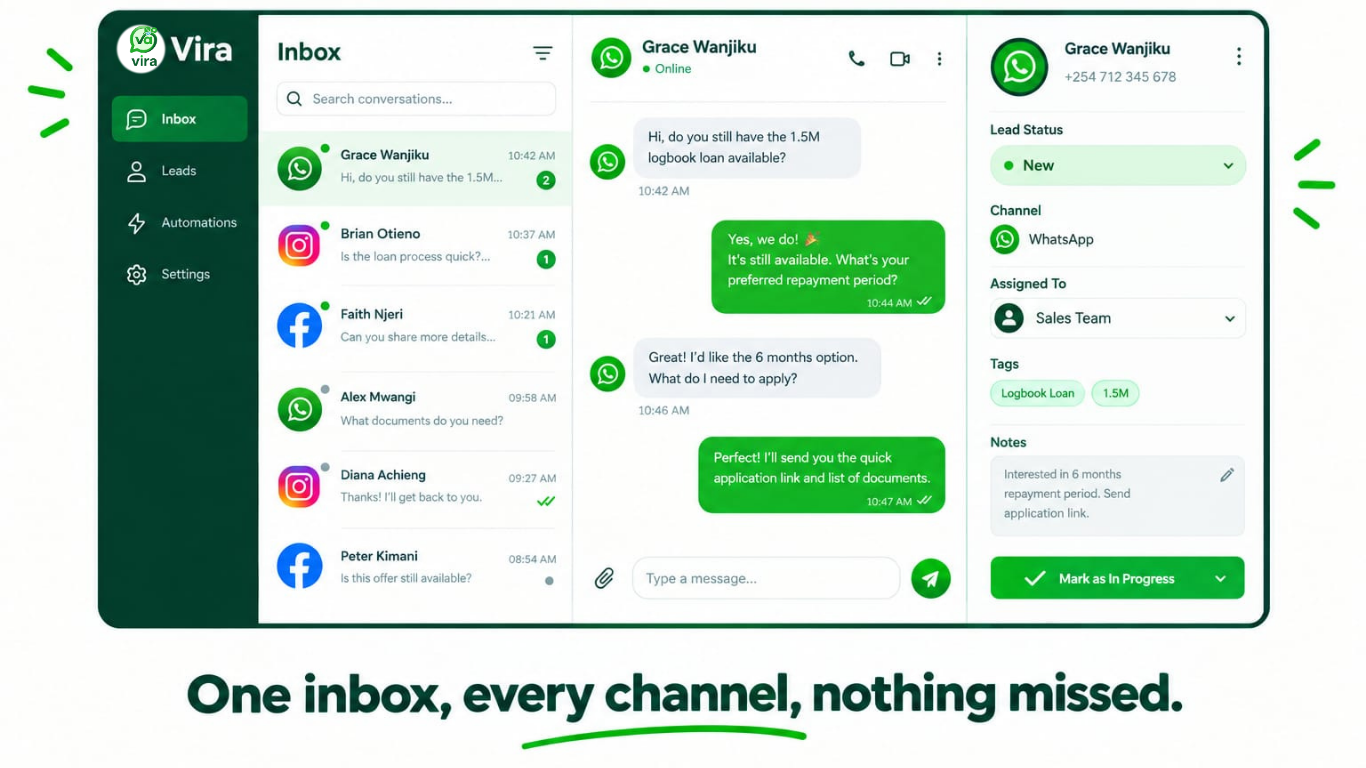
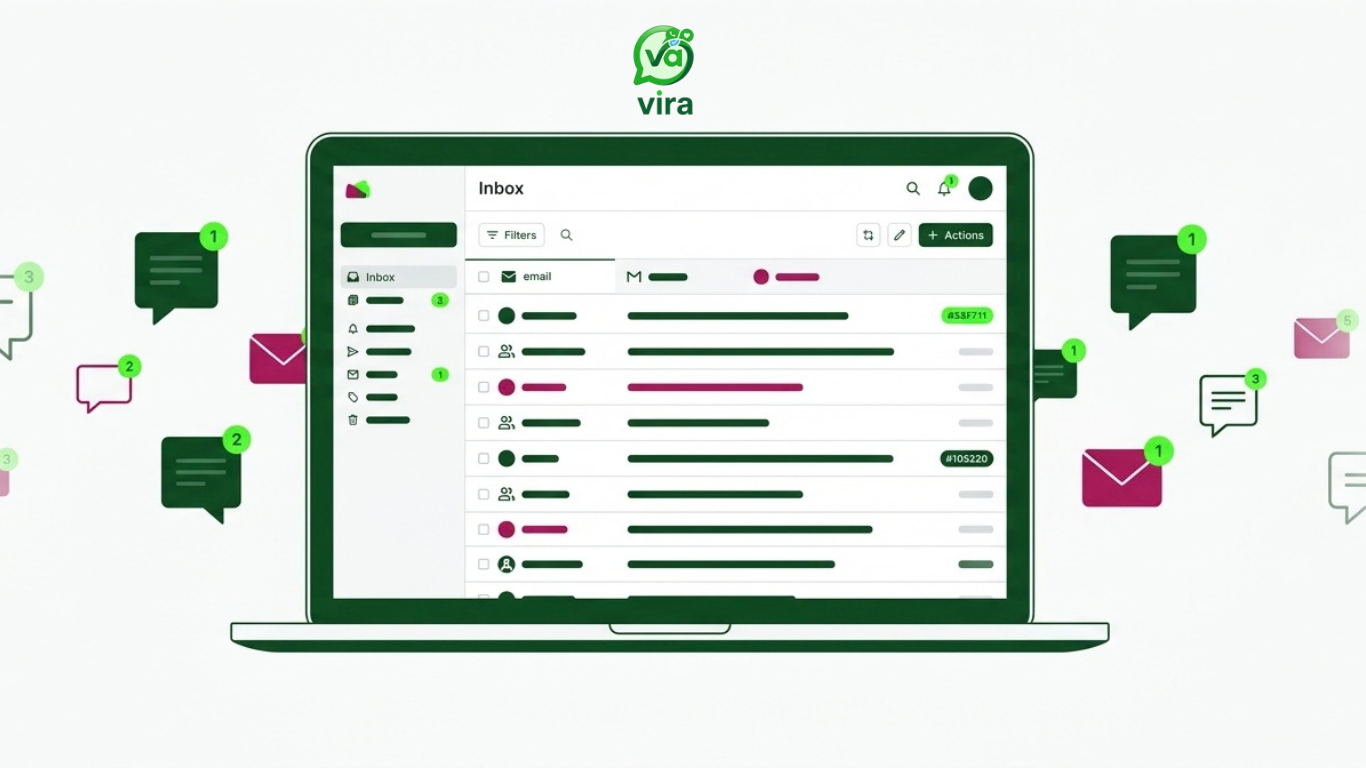
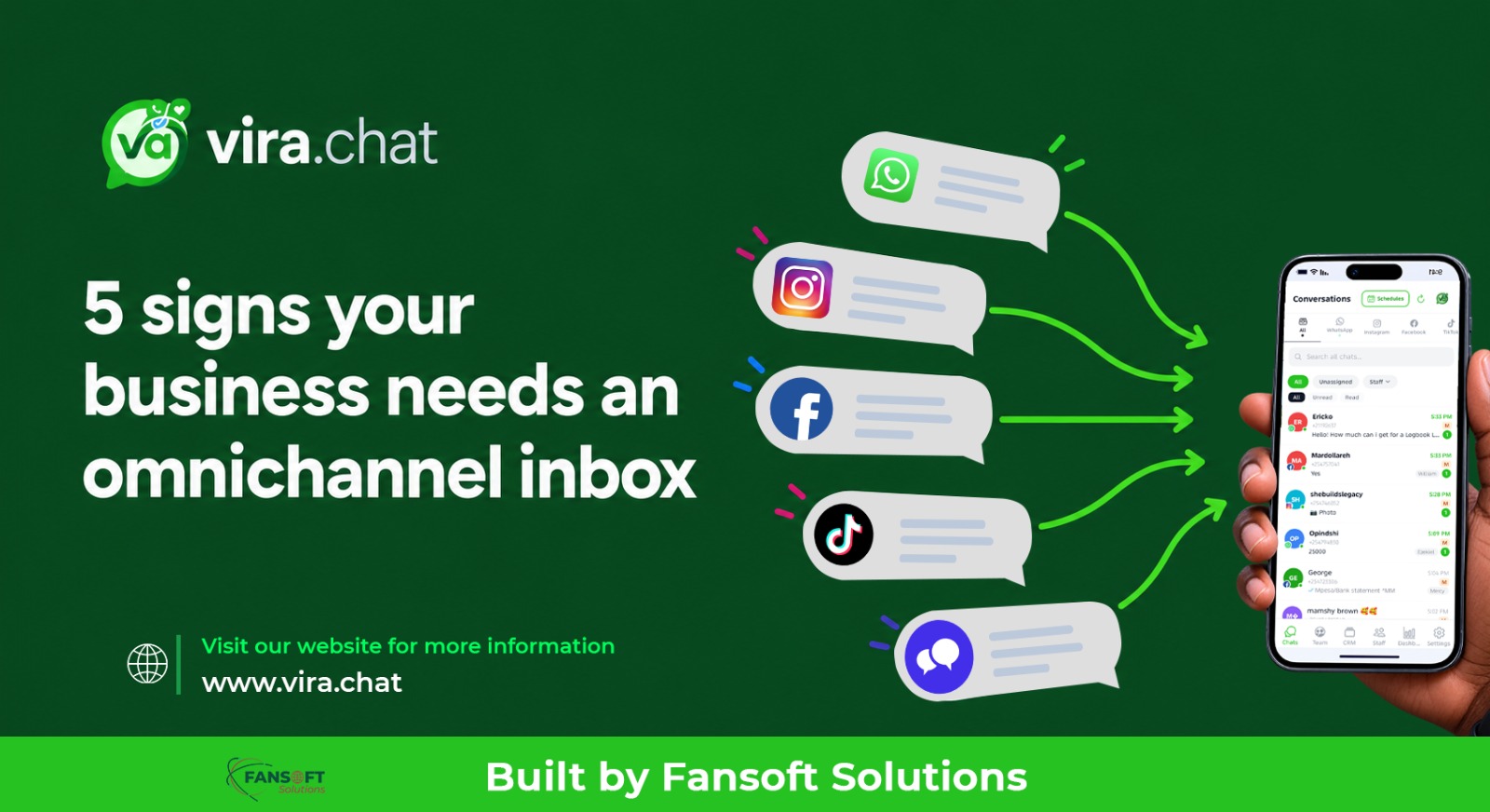
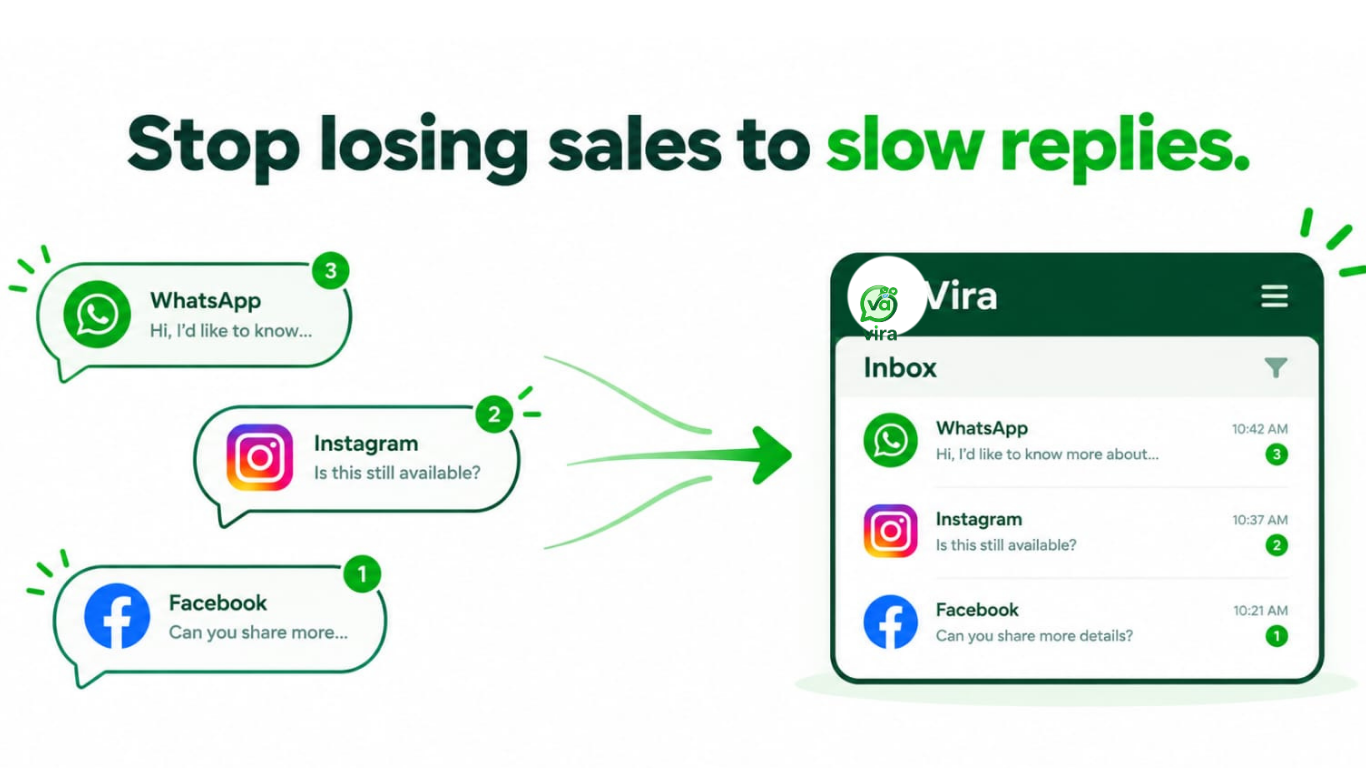
A unified inbox pulls all your conversations into one screen. WhatsApp, Instagram, Facebook, all of it, sitting side by side where your whole team can see them.
That one change fixes a surprising number of problems at once:
Nothing gets missed, because there's no hidden app anyone forgot to open.
Your team stops stepping on each other, because a Shared Team Inbox shows who's already replying to whom.
New enquiries get routed to the right person automatically, so Smart Routing sends a sales question to sales and a support issue to support without anyone having to forward messages around.
When your team can see everything in one shared inbox, the whole tone of your Social Media Customer Service shifts. Replies get faster. Follow-ups actually happen. That customer from the opening story, the one shopping around at 9 a.m., gets an answer while they still care. You stop competing on price alone and start winning on the thing customers quietly reward most, which is being answered like a real human, quickly.
It also makes managing the workload sane. Instead of five people watching five phones, you've got one workspace where the flow of conversations is visible and assignable. That's the difference between a team that reacts and a team that's actually in control.
What This Means for Business Messaging in Kenya
Here's where it gets real for us locally. In Kenya, so much buying happens straight inside DMs and WhatsApp threads. People don't fill out contact forms. They message you, they expect a reply, and if you're slow, they scroll to the next seller. That's just how commerce works here now.
Which means Business Messaging in Kenya is basically your storefront, your sales desk, and your customer service counter rolled into one. A missed message isn't a small admin slip. It's a walked-out customer. For businesses trying to grow, treating business messaging Kenya-style, fast, personal, and organized, is one of the highest-leverage things you can do without spending a shilling more on ads.
You've already paid to get people to message you. The tragedy is losing them after they do.
Stop Losing Sales You've Already Earned
If you've read this far and recognized your own business in the messy version, that's the point. The fix isn't more hustle. It's better structure.
Vira's unified inbox brings WhatsApp, Instagram, and Facebook conversations into one shared workspace, so your team can reply faster, hand off cleanly, and stop letting good leads go cold. It's the calm center your messaging has been missing. See how it works and picture your next 9 a.m. enquiry actually getting answered before your competitor even opens their app.
If this hit a nerve, drop a comment about where your enquiries get stuck most, and share it with the teammate who's always the one saying "we'll get back to you."