
October 29, 2026 · CHARITY
Customer Service Across Channels: Fix Slow Replies
Customer service gets slower when messages sit in separate apps. See how Vira.chat gives every chat an owner. Start a 14 day trial.
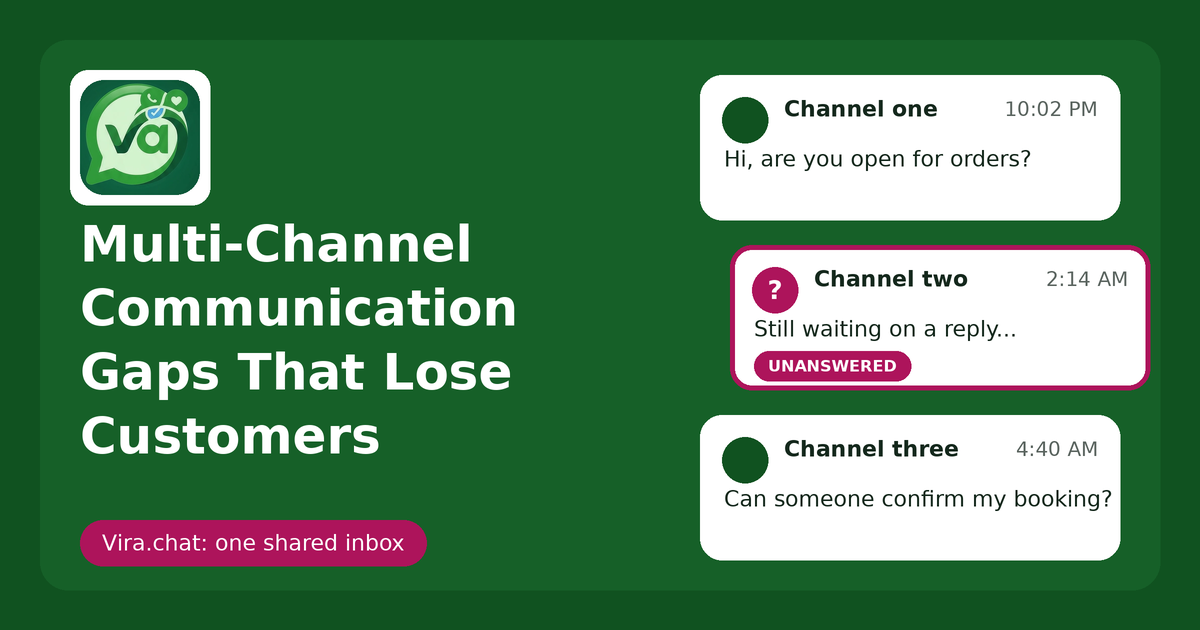
Customer service falls apart the moment a message lands in an app nobody is watching. You know the feeling. It is 9 a.m., you open WhatsApp Business, then Instagram, then the Facebook Page inbox, then TikTok, then the little chat widget on your website, and somewhere in that pile is a customer who asked a simple question twelve hours ago and got nothing back. Not because your team is lazy. Because the question was sitting in a window none of them had open.
That gap between "message received" and "someone replied" is where most growing teams quietly lose business. And the more channels you add, the wider the gap gets.
Why customer service breaks across five channels
Picture a support team of six people. This is an illustration, not a real company, but you will recognize it anyway.
Every morning they split up the apps by habit. One person tends to live in WhatsApp. Someone else keeps an eye on Instagram DMs between other tasks. Facebook comments and messages get checked "when there's time." TikTok is whoever remembers. The website chat pings a shared browser tab that half the team has muted.
Three things go wrong almost immediately:
Two agents reply to the same customer on the same thread, neither knowing the other started. The customer gets two different answers and trusts both of them less.
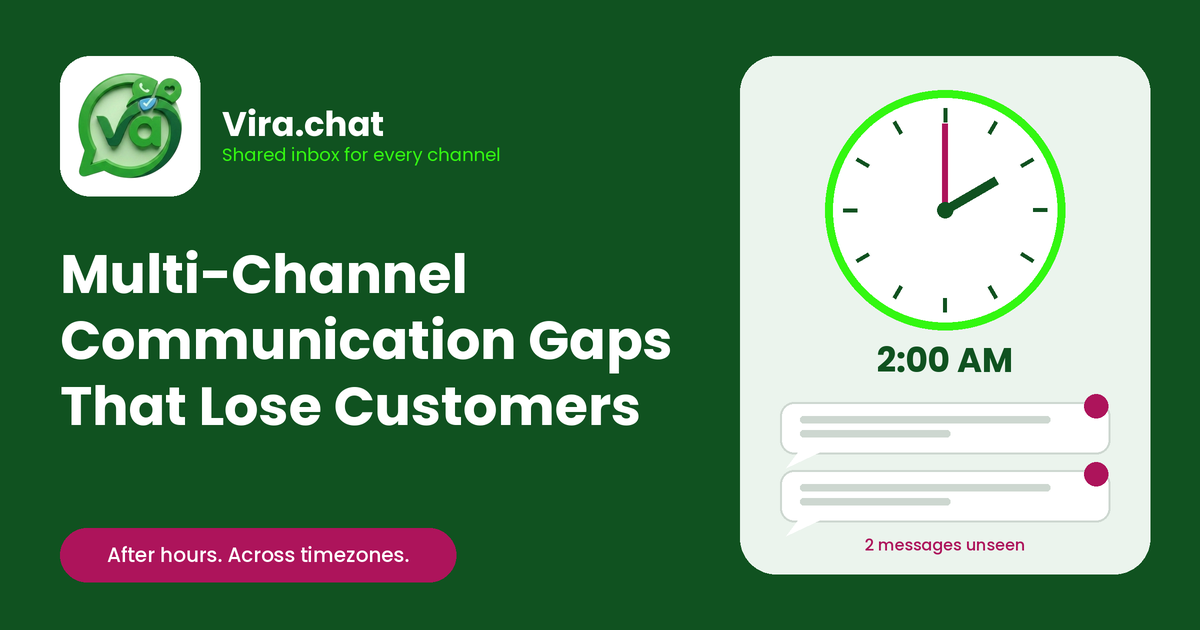
A message sent at 7 p.m. sits unseen until mid-morning, long after the buyer gave up and bought elsewhere.
When a manager asks "who's handling the refund on Instagram?" the honest answer is nobody is sure.
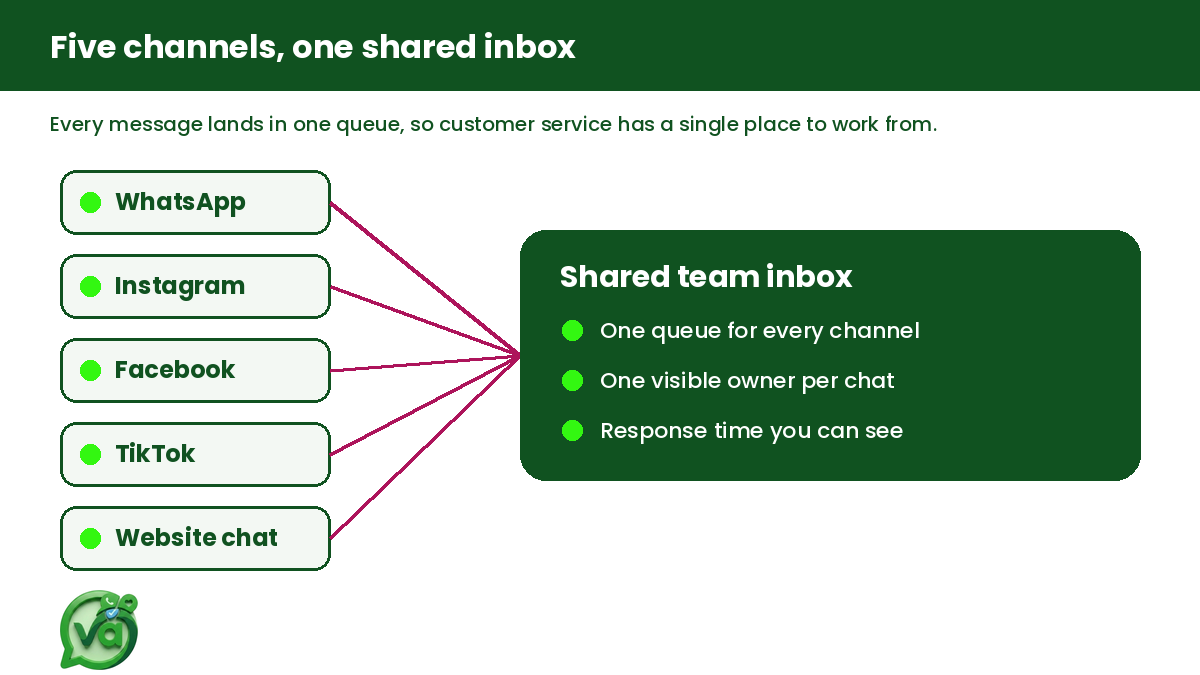
None of this is a people problem. It is a structure problem. Five separate apps means five separate queues, five sets of notifications, and zero shared view of what is actually waiting. Customer service was never meant to be a scavenger hunt across tabs.
What uneven customer service does to the business
Here is the part that shows up in the numbers before it shows up in complaints.
Reply times stop being consistent. A customer on WhatsApp might hear back in four minutes because that is where your fastest agent lives. The same question on TikTok might wait six hours. You are now delivering a different standard of customer service depending entirely on which app someone happened to use, and your customers have no idea why.
Managers feel this as a visibility blackout. You cannot report on a response time you cannot see. You cannot coach an agent whose workload is invisible. You cannot tell whether Tuesday was busy or whether three messages simply got buried. When reviews come up, the conversation turns into guesswork and finger-pointing instead of facts.
And the slow channels do not stay quiet. They become the channels where frustrated buyers leave public comments, because a visible complaint is the one thing that reliably gets a fast answer. That is a terrible way to run a queue.
Where slow replies turn into lost customers
Speed is not a nice-to-have in messaging. It is the whole game.
Research into lead response has shown for years that the odds of reaching and qualifying a buyer drop sharply after the first few minutes of silence. A Harvard Business Review study on lead response time found that companies replying within an hour were far more likely to have a meaningful conversation than those that waited longer, and that the gap only widened as the delay grew. People expect chat to be faster than email, not slower.
So think about what a buried message actually costs. Someone messages your Instagram asking if a product is in stock. They are ready to buy. If the reply comes in ninety minutes, they have already checked a competitor who answered in two. That is not a lost ticket. That is lost revenue, and it never appears on any dashboard because the sale simply happened somewhere else.
Multiply that by every after-hours message, every double-answered thread, every "who owns this?" that ends in nobody owning it. The slow channel is not just annoying. It is the leak.
How Vira.chat fixes customer service on every channel
The fix is not more apps or more willpower. It is one place where every conversation lands and every conversation has an owner.
Vira.chat is a unified inbox for WhatsApp, Instagram, Facebook, TikTok and website chat, built by Fansoft Solutions. Instead of six people chasing five apps, every message from every channel arrives in the same view. Here is what that changes in practice.
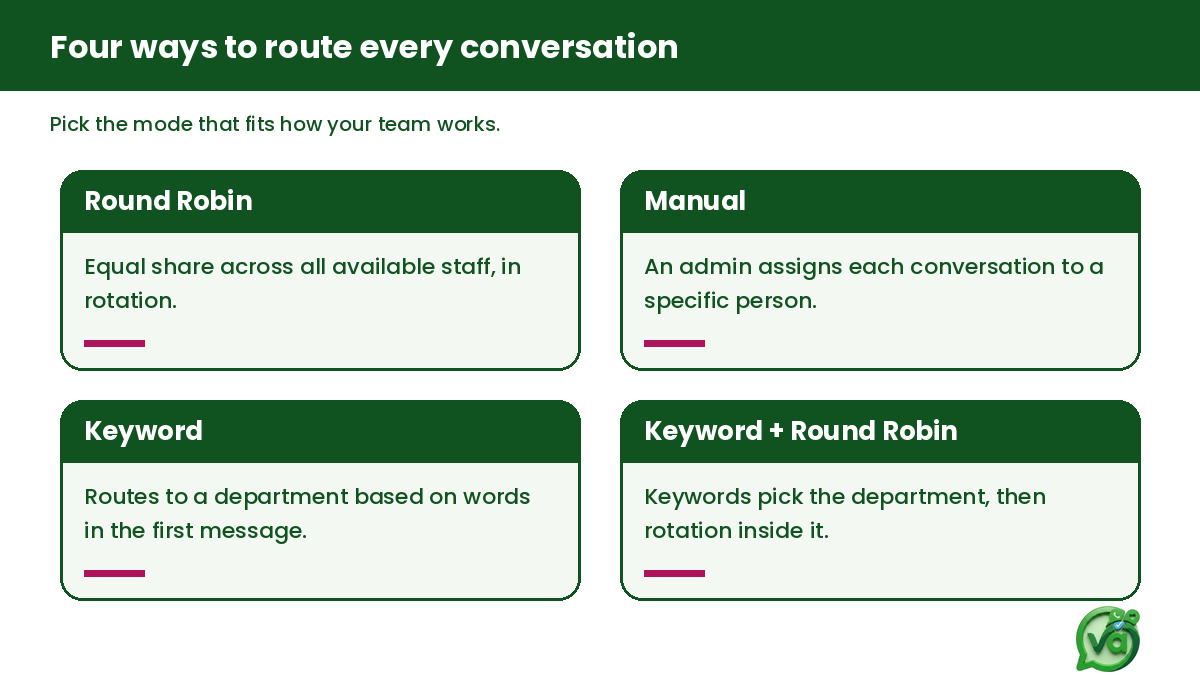
Every chat gets an owner. When a conversation comes in, it can be assigned to one agent, and the rest of the team can see it is taken. No more two people replying to the same customer. No more a message falling between two chairs because each person assumed the other had it.
One queue, one standard. A WhatsApp message and a TikTok message sit side by side, sorted by what is waiting longest, not by which app happens to be open. That alone pulls your slowest channel up to the speed of your fastest one. Consistent customer service stops being a hope and becomes the default layout.
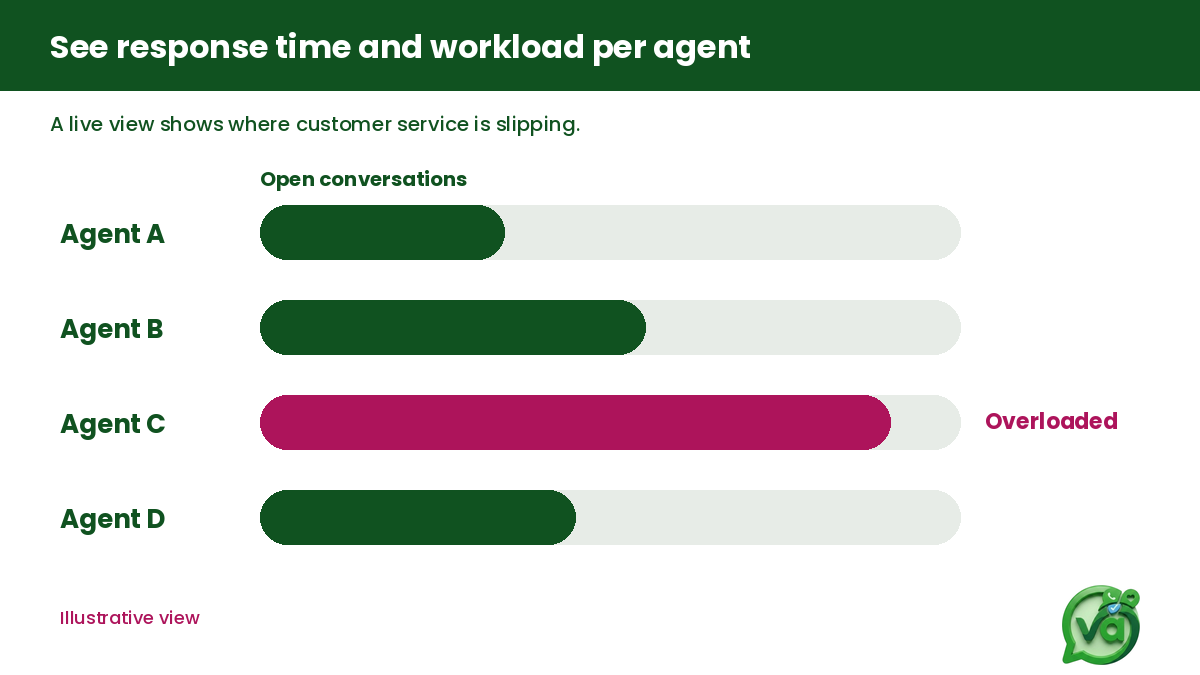
Managers can finally see the work. Response times, open conversations, who is handling what, all in one screen. When review time comes, you are reading real figures instead of reconstructing the day from memory. That is what team accountability looks like when it is built into the tool instead of enforced by nagging.
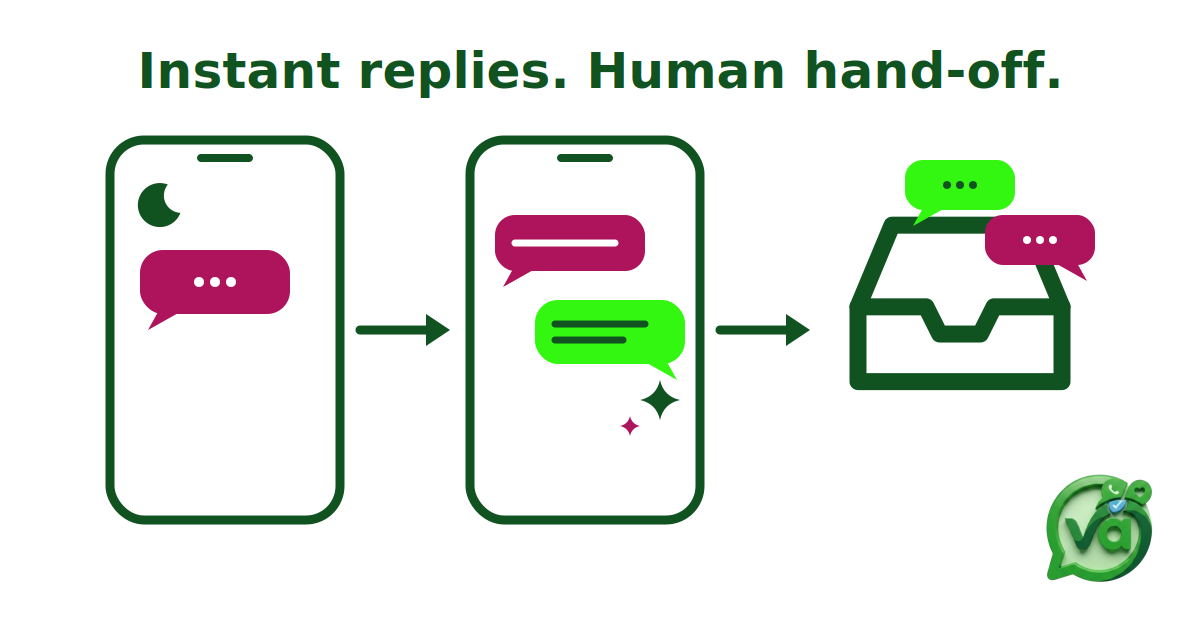
After-hours messages do not vanish. A message sent at 7 p.m. is still right there at the top of the queue the next morning, flagged and waiting, not buried under three hours of newer notifications in an app someone forgot to check.
A single team inbox for customer messaging turns the scavenger hunt into an actual workflow. If you want the deeper breakdown of how assignment and ownership work, our guide on response time and team accountability walks through the day-to-day.
How do you improve customer service across multiple channels?
Short version: stop managing channels and start managing conversations.
If you only change one thing, make it this. Bring every channel into one view and give every conversation a single owner. Everything else follows from that. Here is the order I would actually do it in:
Consolidate first. Get WhatsApp, Instagram, Facebook, TikTok and website chat into one shared inbox before you try to optimize anything. You cannot fix what you cannot see together.
Assign ownership on every thread. Each conversation belongs to one person until it is resolved or handed off on purpose. Ownership is what kills the double-reply and the dropped message at the same time.
Set one response-time target for all channels. Not a different standard per app. One. If it is twenty minutes, it is twenty minutes whether the message came from TikTok or your website.
Review real numbers weekly. Look at where replies slow down and which channel is dragging. Coach from data, not from the loudest complaint.
Do those four things and the chaos stops being chaos. It becomes a queue you can actually run.
Start a 14 day trial and connect your first channel
If slow replies are costing you customers, the way out is not another app to check. It is one place where every message has an owner and nothing waits in the dark. Start a 14 day trial of Vira.chat, connect your first channel in a few minutes, and watch your customer service tighten up by the end of the week. Connect WhatsApp first, or whichever channel is leaking the most right now, and go from there.
Frequently asked questions
Do I have to move all my channels at once?
No. Most teams connect one channel first, usually their busiest, then add the rest once the workflow feels natural. There is no requirement to migrate everything on day one.
Will my team need to learn a completely new system?
The inbox works the way messaging apps already do: a list of conversations, a reply box, and assignment. Agents pick it up fast because the mental model is familiar. The difference is everything lives in one view.
Can I see who replied to a customer and how quickly?
Yes. Every conversation shows its owner and its timing, so you can review response times and workload per agent without piecing it together from five different apps.
What happens to messages that come in after hours?
They stay in the queue, flagged and visible, so the first person in the next morning sees them at the top instead of buried. Nothing gets lost to the overnight gap.
Does this work for both sales questions and support questions?
It does. The same unified inbox handles customer messaging across the board, whether someone is asking to buy or asking for help, and you decide how to route or assign each type.