
October 14, 2026 · CHARITY
Customer Communication : Track Leads Won or Lost
Customer communication tool demo: claim a lead, mark it won or lost with a reason, and send outcomes back to Meta Ads from one inbox.
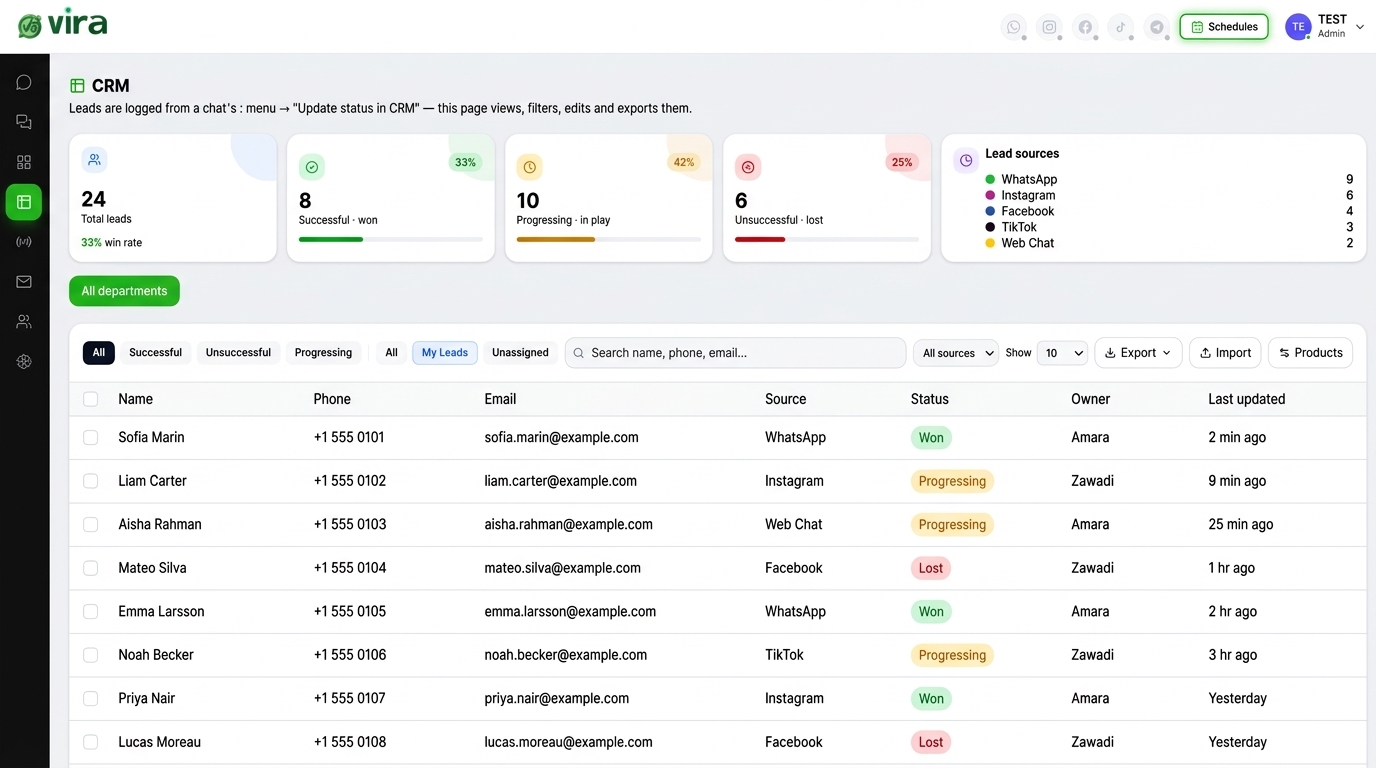
Strong customer communication does not end when the chat closes. A rep answers a question, the customer says thanks, and the conversation drifts to the bottom of the list. Nothing is marked. Nobody knows whether that person bought, walked away, or is still thinking it over. The chat is closed, but the lead is in limbo.
That gap is where revenue quietly leaks out. You can run a tidy inbox and still have no idea which conversations turned into sales. The fix is simple to describe and often hard to do: make every conversation end in a decision, not just an ending.
Customer Communication That Ends in an Outcome
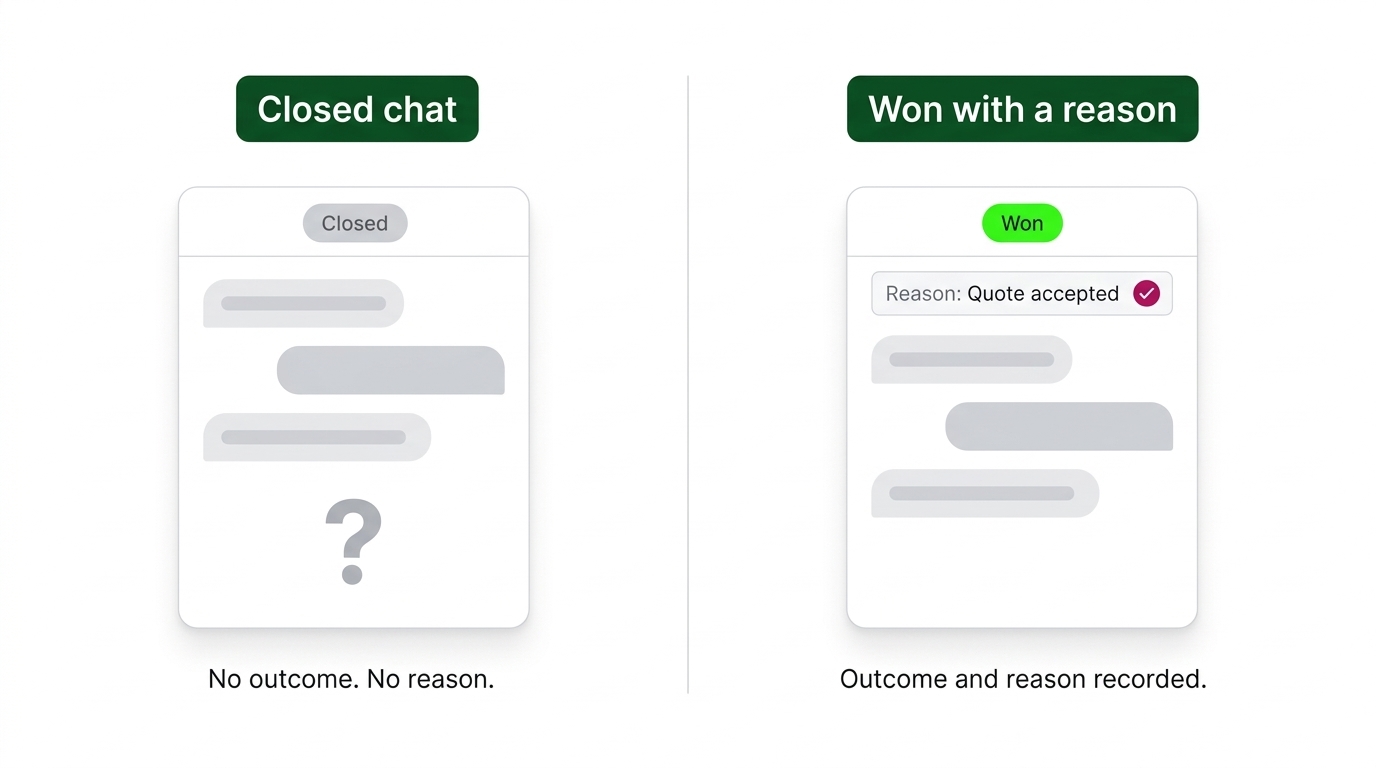
Think about the difference between "this chat is resolved" and "this lead is won." They sound similar. They are not. A resolved chat means the talking stopped. A won or lost lead means you know what happened and why.
When your team treats outcomes as the finish line, three things change. You can actually measure which campaigns bring buyers versus browsers. You can spot patterns in why people say no. And you stop having the same conversation twice because the context travels with the lead.
Good lead tracking is less about activity and more about conclusions. It is fine to have fifty open chats on a Monday. It is a problem if you cannot say how many of last week's fifty turned into customers.
Demo: Claim, Follow Up, Mark Won or Lost
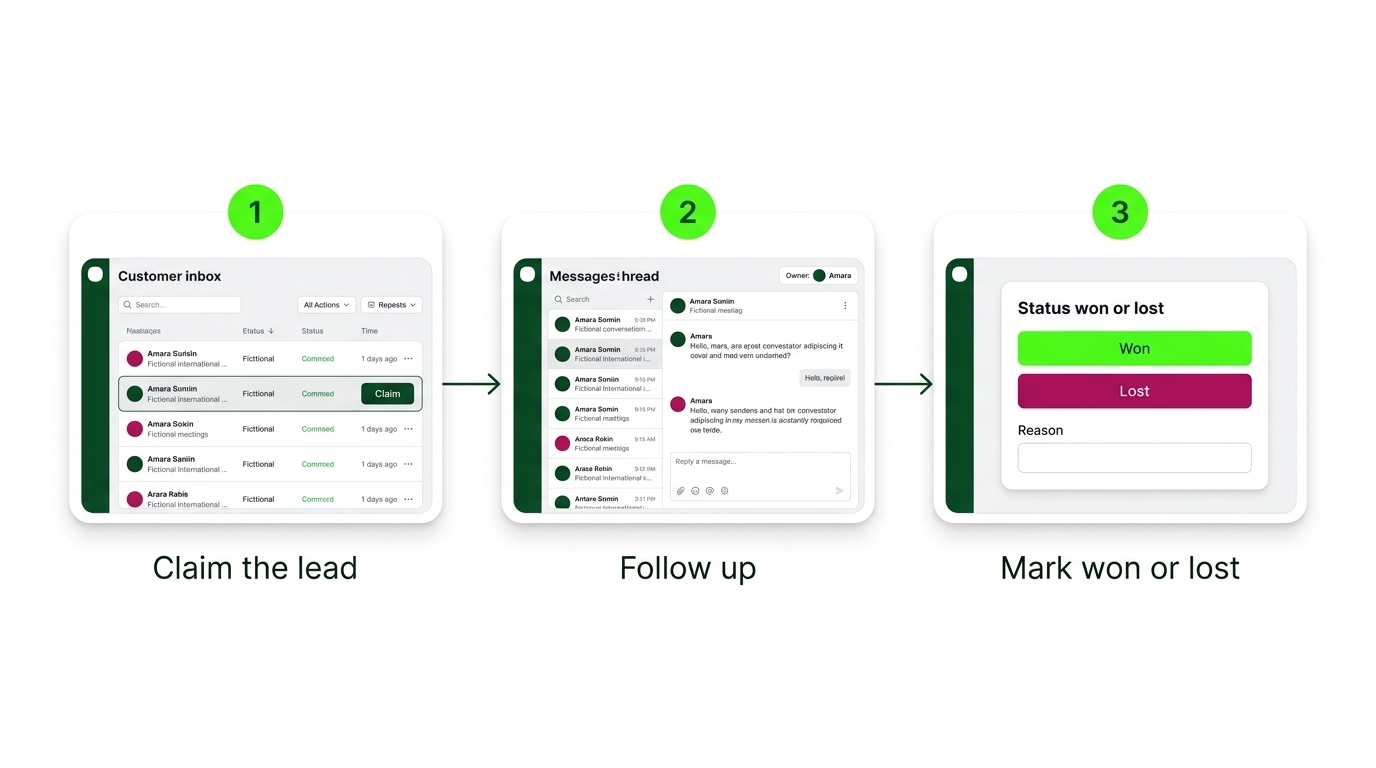
Here is the walkthrough, step by step, so you can see how a single conversation moves from a first message to a recorded result.
Claim the lead. A new message lands in the shared inbox. A rep claims it, which assigns ownership and stops two people replying to the same person. Now there is a name attached to the outcome, which matters when you review results later.
Follow up with context. The rep sees the full thread, including which ad or campaign brought the person in. No scrolling through screenshots, no asking a colleague what was promised. They reply, answer the pricing question, send a link, whatever moves things forward.
Mark it won or lost. This is the step most tools skip. When the conversation reaches a decision, the rep marks the lead won or lost and picks a reason from a short list: bought, too expensive, wrong fit, went quiet, chose a competitor. The reason is not optional fluff. It is the part that makes the data useful.
The outcome sticks to the lead. From then on, anyone opening that contact sees the result and the reason without asking. A support lead reviewing the week gets a clean picture instead of a pile of closed chats.
That is the whole loop. Claim, follow up, decide, record. It takes a few seconds per conversation and it turns a messaging thread into something you can report on.
If you want the groundwork on how shared inboxes handle incoming messages in the first place, our guide on customer messaging on social media with Vira covers the basics before outcomes come into play.
Why Lost Reasons Make Your Ads Smarter
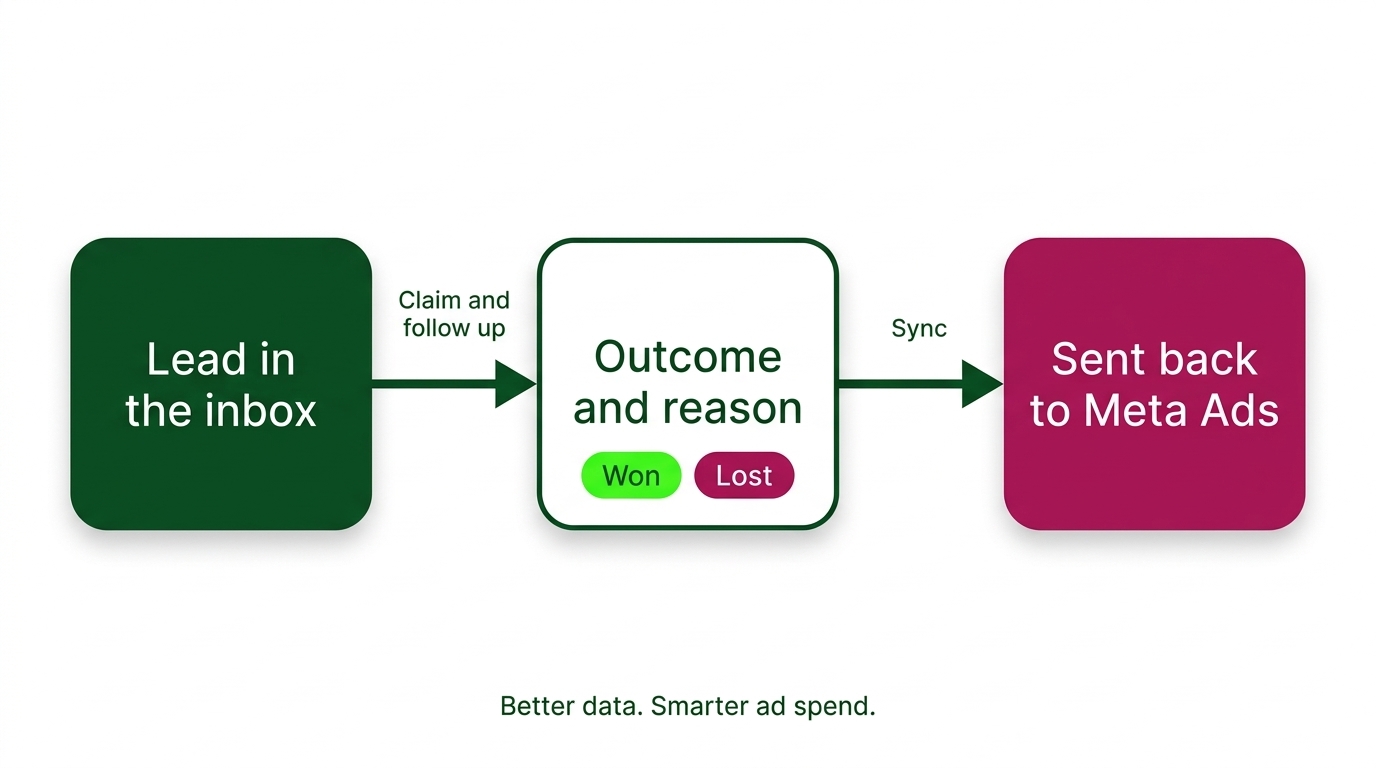
Won or lost leads are only half the value. The reasons are where it gets interesting, especially when they feed back into advertising.
Say you mark forty leads lost over two weeks and twenty-five of them say "wrong fit." That is not a sales problem. That is a targeting problem. Your ads are attracting people who were never going to buy, and you are paying for every one of those clicks. Without the reason attached, you would just see a low conversion rate and blame the team.
Now connect that back to the source. When a customer communication tool sends outcomes back to the platform, your ad account learns which conversations ended in sales and which did not. That signal helps the system show your ads to people who look like your actual buyers, not just anyone willing to send a message.
The mechanics of this matter, and the platform documentation is worth reading directly. The Meta Business Help Centre guidance on lead ads explains how conversion data flows back into campaign optimisation. Feed it clean won and lost signals and your cost per real customer tends to drop over time.
This is the quiet payoff of disciplined lead tracking. You are not just tidying your pipeline. You are teaching your ad spend to find better people.
The Takeaway
A closed chat tells you nothing. A lead marked won or lost, with a reason, tells you almost everything: what works, what does not, and where to spend next. The habit is small. Claim, reply, decide, record. The compounding effect on your reporting and your ad performance is not.
For teams running volume across several channels, this only works when everything lives in one place, which is the whole argument for a unified inbox and why fast-growing teams lean on one.
Watch the walkthrough to see customer communication and lead outcomes in one inbox, and how a single thread carries its result from first message to final decision.