
October 23, 2026 · CHARITY
Customer Communication Platform: Ending Duplicate Replies
A customer communication platform stops two agents answering the same customer. See how shared inbox ownership prevents duplicate and missed replies.
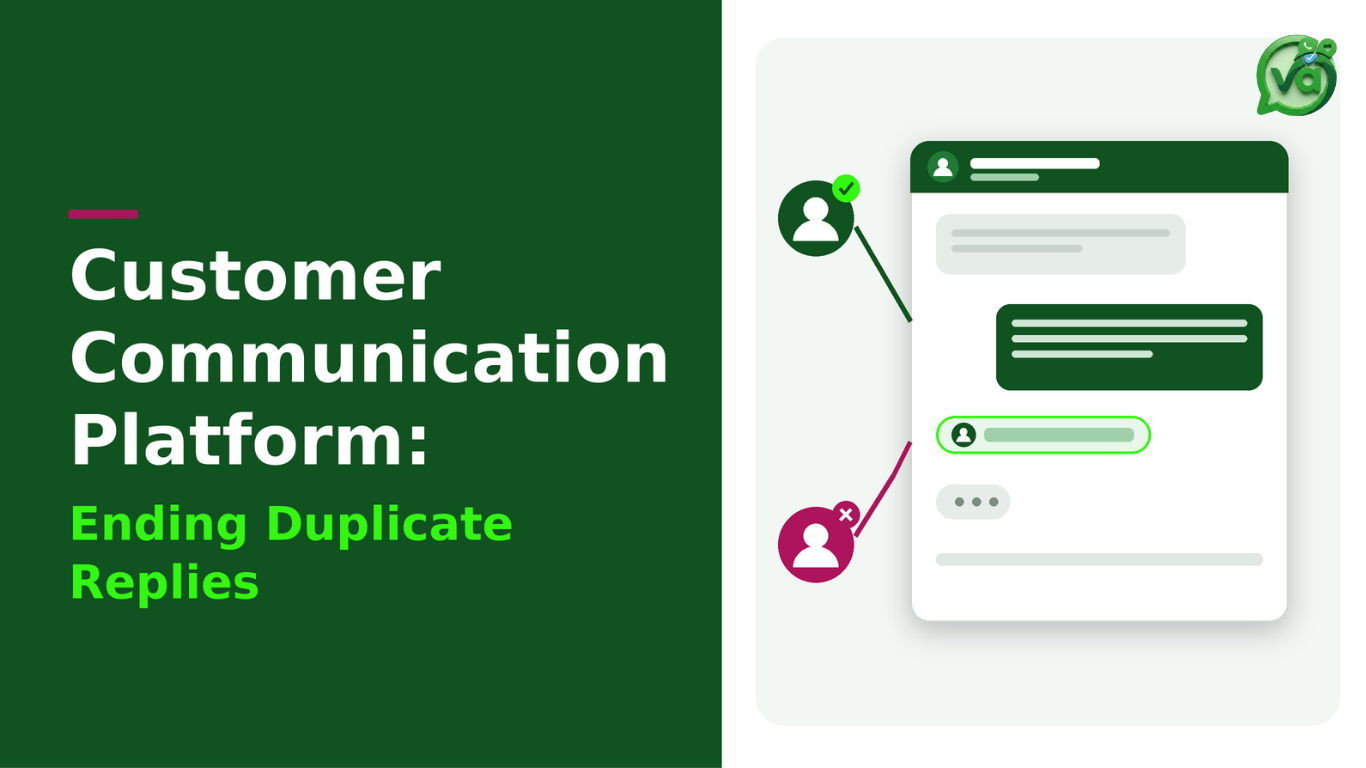
Picture a customer who sends one message asking where their order is. Within a few minutes, two different people on your team see it. One apologizes and offers a refund. The other says the package shipped yesterday and gives a tracking number. Same customer, same question, two answers that flatly contradict each other. Now that customer trusts you a little less, and both agents have wasted their time.
A customer communication platform earns its keep the first time two agents stop answering the same customer. That one moment, where the system quietly steps in and says "someone's already got this," saves more than a few seconds. It saves the credibility you've spent months building.
The real cause isn't carelessness
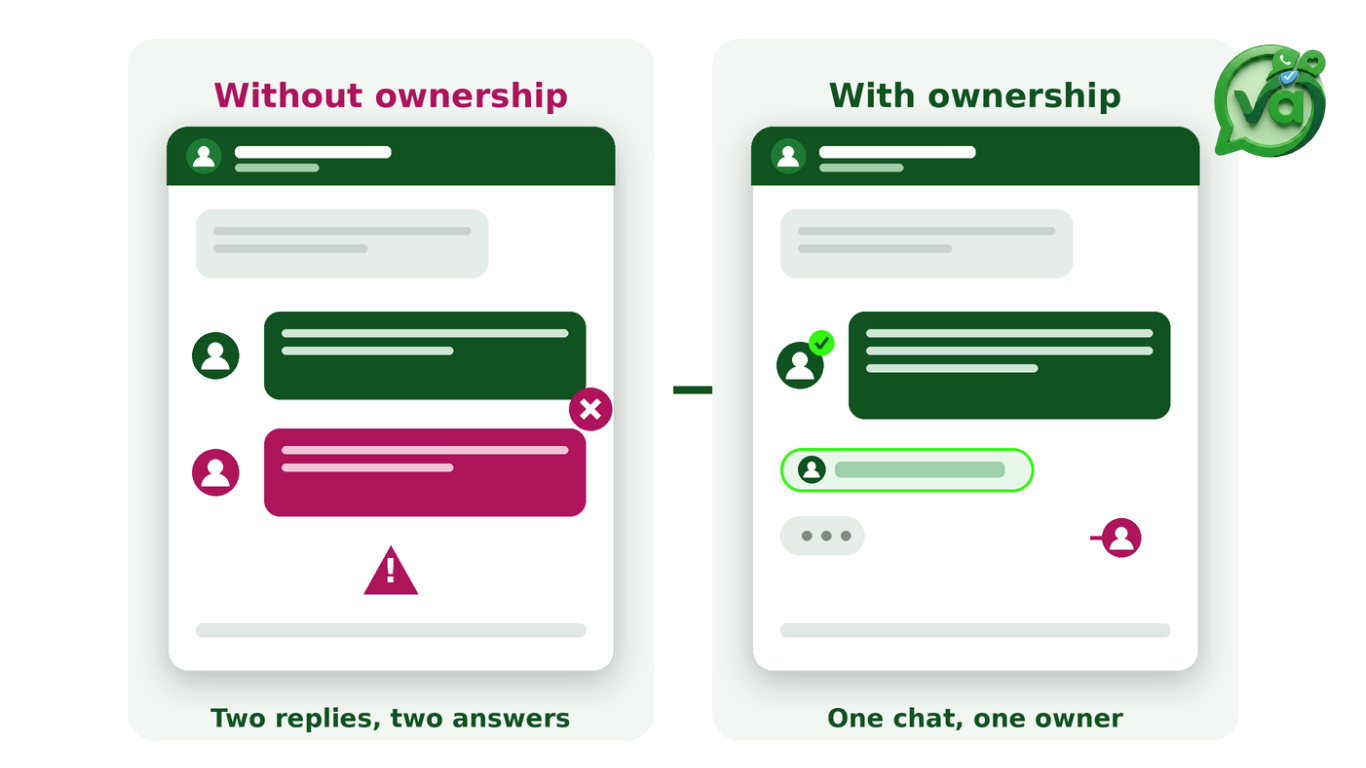
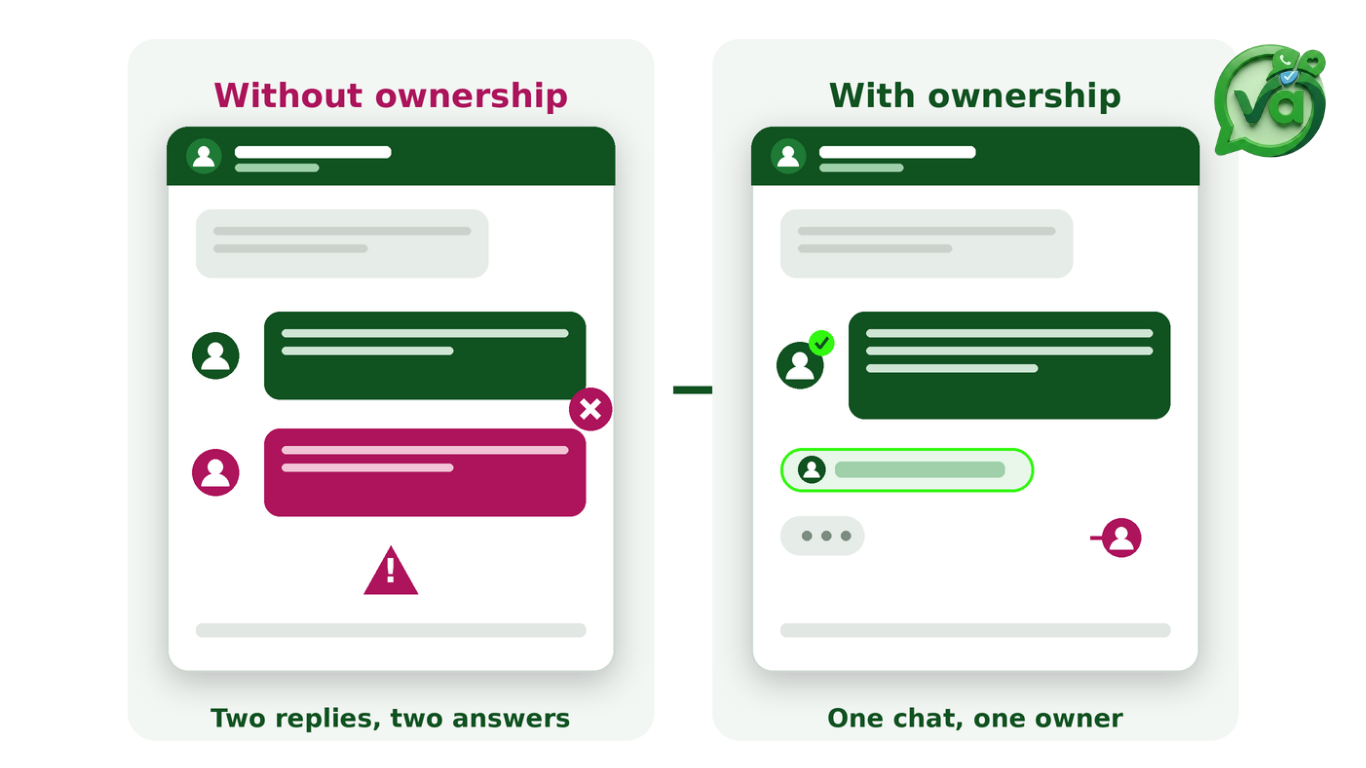
When you dig into why duplicate replies happen, it's almost never because your agents are sloppy. It's because the setup makes collisions inevitable.
Imagine five people staring at the same list of unanswered chats. There's no indicator showing who's typing, who's already claimed a conversation, or who replied thirty seconds ago. So two people grab the same one at once. They're both trying to be helpful. They're both fast. And that's exactly how the problem starts.
The flip side is just as common and even worse: a message that nobody answers at all. Everyone assumes someone else has it. The chat sits there, quietly ignored, while the customer waits. Both problems, the double reply and the missed reply, come from the same gap. Nobody clearly owns the conversation.
I've watched support leads try to patch this with rules. "Check before you reply." "Announce in the group chat before you take one." Those rules work for about a week, then everyone gets busy and the collisions come right back. You can't solve a structural problem with good intentions.
Why a customer communication platform ends duplicate replies
The fix is ownership built into the tool, not reminders pinned to a wall. A proper customer communication platform assigns every incoming conversation to one person, and makes that assignment visible to the whole team.
Here's what that actually looks like in practice:
When an agent opens a chat, it shows as claimed. Everyone else sees their name on it.
If someone's already typing, there's a live indicator so a second person doesn't start writing a conflicting answer.
Unassigned messages don't float in limbo. They land in a queue that a manager or the system routes to a specific person.
The difference is subtle but it changes everything. Instead of a free-for-all where the fastest clicker wins, you get a clear line of responsibility. One conversation, one owner, one voice reaching the customer.
This is the same principle I keep coming back to when people ask me about who owns each customer chat. Ownership isn't a nice-to-have. It's the single setting that prevents the most embarrassing support mistakes.
The cost of a fumbled reply is bigger than it looks
It's tempting to treat a duplicate reply as a minor annoyance. Two people wasted a minute, no big deal. But the damage runs deeper, especially when you're dealing with new leads rather than existing customers.
Harvard Business Review studied how quickly companies respond to online inquiries, and the findings in "The Short Life of Online Sales Leads" are hard to ignore. Leads go cold fast. A response that's slow, or confused, or contradicts itself, is often as bad as no response at all. When a potential customer gets two different answers from your team, they don't think "oh, they're just busy." They think "these people don't have it together," and they move on.
So the duplicate reply isn't only an internal inefficiency. It's a trust problem that directly affects whether someone buys from you. And the missed reply? That's a lead you never even got to talk to.
What a shared inbox actually fixes
The tool most people reach for is shared team inbox software, and for good reason. It takes a messy pile of conversations scattered across personal accounts and pulls them into one place where the whole team works together.
But here's the thing I want to be clear about. A shared inbox only helps if it has real ownership features. Some tools just dump everyone's messages into one giant pool and call it "shared." That's not collaboration, that's chaos with a nicer label. You've just made it easier for five people to see the same message and all try to answer it.
Good team inbox for customer support does the opposite. It shares visibility while keeping responsibility singular. Everyone can see the whole picture, but each conversation belongs to exactly one person at a time. You can reassign it, loop in a teammate with a private note, or hand it off cleanly when your shift ends. Nobody steps on anyone's toes because the tool makes the toes visible.
If you've ever felt the slow drag of a system that doesn't do this, you already know the symptoms. I wrote more about that in what a disorganized customer communication platform costs, and the short version is: the costs are real, they're just hard to see on a spreadsheet until a customer complains.
Small team or big, the problem scales up not down
You might think this is only a problem for large support teams. It's actually worse for small ones.
A big team usually has processes, a dedicated queue manager, maybe someone whose whole job is routing. A small team of three or four people often has none of that. Everyone does everything. Everyone jumps on whatever comes in. And with that much overlap and no system, duplicate replies happen constantly, you just might not hear about them because the customers quietly stop responding.
So if you're running lean, don't tell yourself you're too small for proper tooling. You're exactly the team that benefits most from having ownership baked in, because you can't afford a dedicated person to police it manually.
What to look for when you're choosing one
If you're shopping around, here's how I'd evaluate any option. Skip the feature lists and ask these questions:
Can I see, at a glance, who owns each conversation right now?
Does it warn me before I reply to something a teammate is already handling?
Is there a clear queue for unassigned messages so nothing slips through?
Can I hand a chat to a colleague without the customer noticing the seam?
If a tool can't answer yes to all four, it won't actually stop your duplicate and missed replies. It'll just reorganize them into a prettier interface. The whole point of moving to a shared system is accountability, and accountability needs these four things to function.
Make ownership the default, not the exception
The teams that beat this problem all do one thing: they make clear ownership the normal state, not something you have to remember to set up. Every message gets an owner the moment it arrives. No conversation exists without a name attached to it.
When that's the default, duplicate replies basically disappear. Not because your people got more careful, but because the situation that caused the mistake stopped existing. You removed the collision point instead of asking humans to avoid it by sheer willpower.
That's really the whole argument for moving to a dedicated customer communication platform. It takes the one thing that causes your most visible support errors, the question of who's responsible, and answers it automatically, every single time, for every single message.
If your team has ever sent a customer two contradictory answers, or left a message sitting unanswered because everyone assumed someone else had it, the fix isn't another reminder in your group chat. See how Vira gives every conversation one clear owner so your team can stop stepping on each other and start giving customers a single, confident answer.