
September 29, 2026 · CHARITY
Unified Inbox Software Demo: Never Drop a Lead Again
Leads that nobody claims go cold. See how Vira's unified inbox software routes, assigns and tracks every conversation so no lead gets dropped.
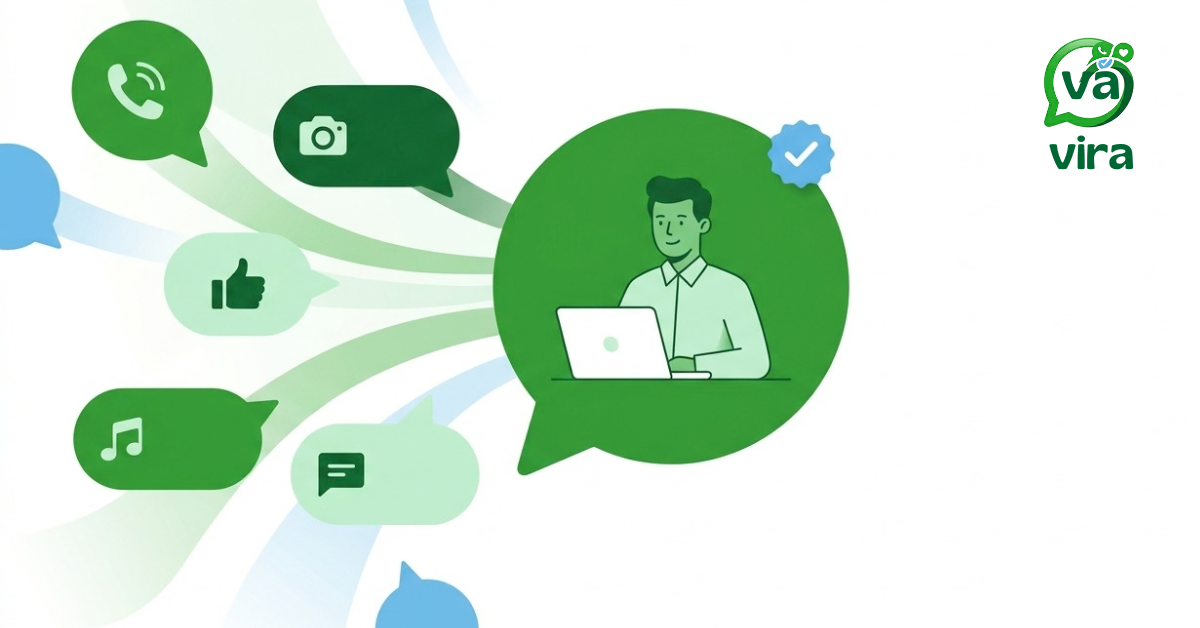
Leads arrive on WhatsApp, Instagram, Facebook, TikTok and website chat, and the ones nobody claims go cold. A message lands at 9:14 in the morning, three people see it, everyone assumes someone else will answer, and by noon that prospect has already booked with a competitor who replied in four minutes. This is the quiet leak in most sales operations, and unified inbox software exists to seal it. The idea is simple: pull every conversation into one place, give each one an owner, and make it impossible for a lead to sit unattended.
Speed is not a soft advantage here. Research covered by Harvard Business Review found that companies contacting a new lead within an hour were nearly seven times more likely to have a meaningful conversation than those who waited even sixty minutes longer, and roughly sixty times more likely than firms that waited a day or more. The window is short. If your team is toggling between five apps to notice a lead exists, you have already lost most of that window.
Let me walk through how Vira closes the gap, step by step, using the actual dashboard.
How Unified Inbox Software Keeps Every Lead Owned
The core principle is ownership. A lead without an owner is a lead nobody is responsible for, and unclaimed responsibility is how leads die. Good unified inbox software does more than collect messages in one screen. It decides who handles each one, tracks whether they did, and records the outcome so you can see what is working. Ownership, routing, resolution, measurement. Those four things are the whole system.
All five channels in one inbox
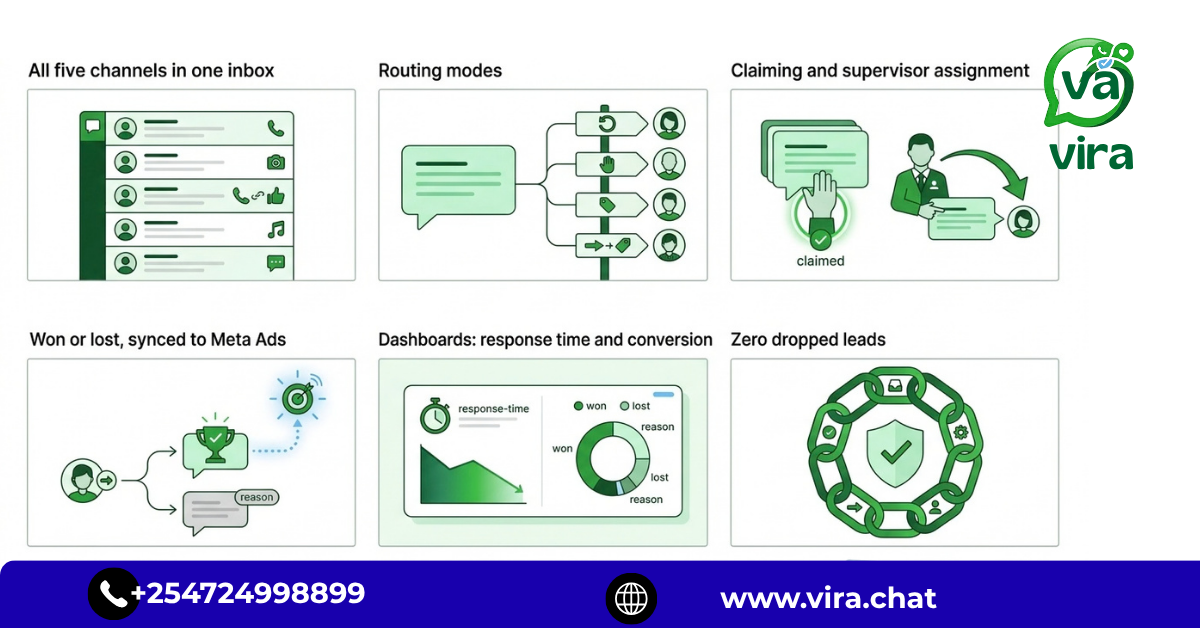
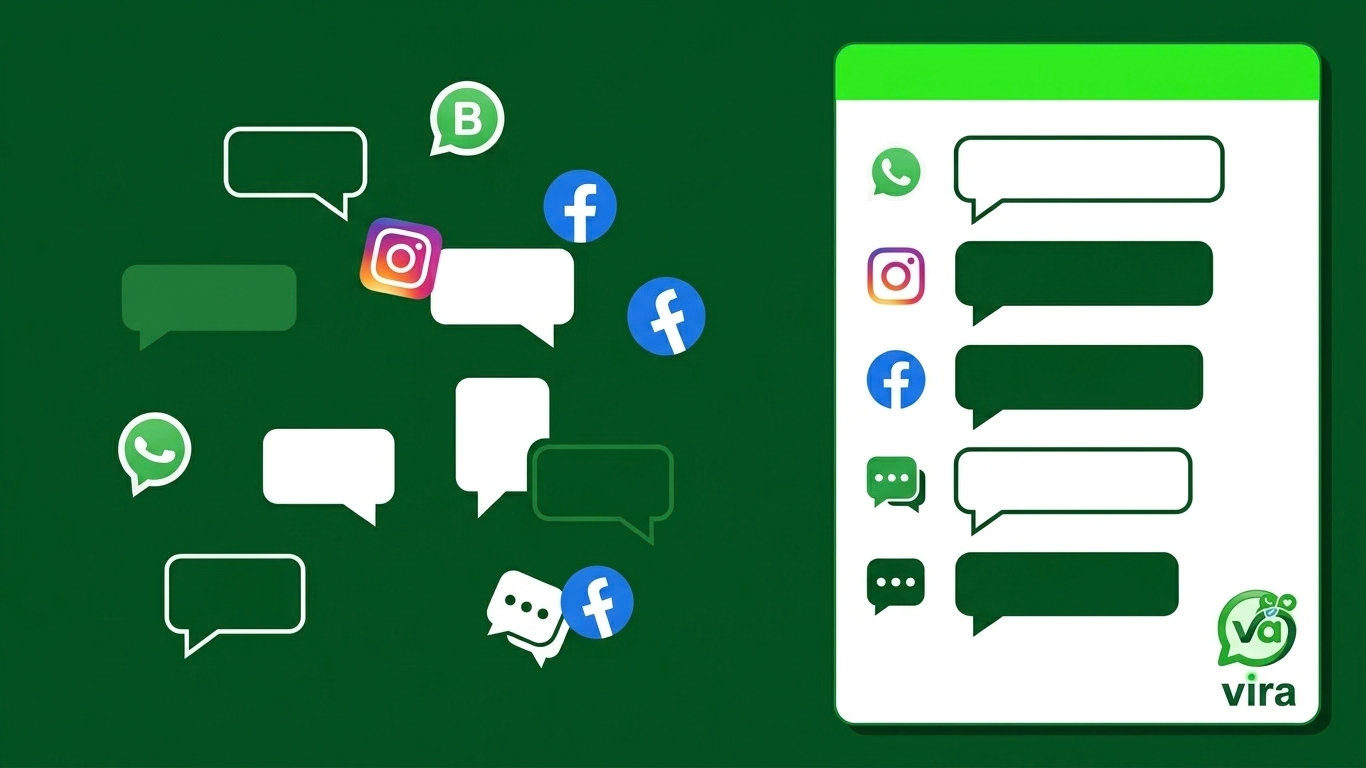
Start with the inbox itself. When a message comes in from WhatsApp, Instagram, Facebook, TikTok or your website chat widget, it appears in the same list, in the same layout, with the same reply box. Your agent does not need five browser tabs or five phones. They see the customer's name, the channel the message came from, the conversation history, and any notes left by teammates.
This is the practical meaning of omnichannel communication: the customer chooses where to reach you, and your team works from one queue regardless. A prospect who first messaged on Instagram and later followed up on WhatsApp shows up as one person with one thread, not two disconnected strangers. That continuity matters, because nothing frustrates a buyer faster than repeating themselves.
Routing modes: who gets the lead
Getting messages into one place solves visibility. Deciding who answers solves ownership. Vira gives you four routing modes, and choosing the right one depends on how your team actually works.
Round Robin distributes new conversations evenly across available agents. Good for teams where every agent handles the same kind of inquiry and you want balanced workloads.
Manual leaves conversations in a shared pool until someone claims them. This suits small, tight teams who prefer to grab what fits their expertise.
Keyword routes based on what the message contains. A conversation mentioning "refund" can go to support, while "pricing" goes to sales, before a human even reads it.
Keyword + Round Robin combines both. It first sorts by keyword, then rotates evenly among the agents who handle that category.
The point of these modes is to remove the pause where a lead waits for a decision. The decision is already made by the rule. A message about enterprise plans lands on the right person's screen in seconds, not after three internal forwards.
Claiming a lead, and supervisor assignment
In modes like Manual, an agent claims a lead with a single action. Once claimed, that conversation is theirs. It shows their name, it disappears from the general pool, and the rest of the team can see it is handled. No two people accidentally reply to the same customer with two different answers.
Supervisors have a stronger tool. From the same view, a manager can assign a conversation directly to a specific agent. Say your best closer just came free and there is a high-intent lead waiting: the supervisor reassigns it in one click. Or an agent goes offline mid-conversation and someone needs to take over. Direct assignment means no lead is stranded because its owner stepped away. This is the difference between a customer communication platform that merely displays messages and one that actually manages accountability.
Marking a lead won or lost, synced to Meta Ads
A conversation does not end when the typing stops. It ends with an outcome. Inside Vira, an agent marks each lead as won or lost, and when it is lost, they select a reason: price, timing, went with a competitor, no response, wrong fit, and so on.
Here is where it gets useful beyond your inbox. Those outcomes sync back to Meta Ads as conversion signals. When you tell Meta which leads actually turned into customers, its system learns to find more people like them. You stop optimizing for cheap clicks and start optimizing for real business. A lead you mark won on WhatsApp becomes a data point that sharpens your ad spend. Meta's own Conversions API documentation explains why server-side signals like these have become the reliable way to feed that loop, especially as browser tracking keeps eroding.
So the reason field is not paperwork. It is the mechanism that connects your customer messaging back to how you acquire customers in the first place.
Dashboards: response time and conversion
You cannot fix what you cannot see. The dashboard turns all of this activity into two numbers that matter most.
The first is response time. You can see how long, on average, it takes your team to reply to a new conversation, broken down by agent and by channel. If TikTok inquiries sit for two hours while WhatsApp gets answered in three minutes, you now know exactly where the leak is. Given what we know about the value of that first hour, watching this number is not optional.
The second is lead conversion. The dashboard shows how many leads were won versus lost, and because every lost lead carries a reason, you can see the pattern. If forty percent of losses are tagged "no response," that is a staffing or routing problem, not a market problem. If they are mostly "price," that is a conversation for your commercial team. The data tells you which meeting to hold.
Put together, these dashboards let a manager run the whole operation on facts instead of hunches. That is the quiet payoff of running everything through one system.
Why "zero dropped leads" is actually achievable
People are skeptical of absolute claims, and they should be. But zero dropped leads is not a slogan here, it is a consequence of the design. Walk the chain back:
Every channel feeds one queue, so no message is invisible.
Every conversation gets routed by a rule, so none waits for a decision.
Every lead has one owner, so responsibility is never diffuse.
Supervisors can reassign, so no lead is stranded by an absent agent.
Every outcome is recorded, so nothing slips out untracked.
Remove any one of these steps and leads leak. Keep all five and the leak closes. That is the entire argument for a unified inbox as your central sales tool rather than a loose collection of apps.
The teams that struggle most are usually the ones scaling up their marketing without scaling their ability to respond. More ad spend into a leaky inbox just wastes more money faster. Fix the response layer first, then pour on the volume.
See it for yourself
Reading about routing modes is one thing. Watching a lead move from a TikTok comment to a claimed, answered, and won conversation in real time makes it click. You can watch the full walkthrough inside the actual dashboard, or explore the feature in detail to see how each routing mode behaves with your kind of traffic.
Every lead your team lets go cold is one a faster competitor is happy to pick up. Give each conversation an owner, measure the response, and close the loop back to your ads. That is what good unified inbox software is for, and it is a far smaller change than the revenue you are currently leaving on the table.