
October 2, 2026 · CHARITY
Business Messaging: Who Owns Each Customer Chat?
Business messaging becomes messy across WhatsApp, email, and social media. Learn to assign chats, clarify team roles, and improve customer experience.
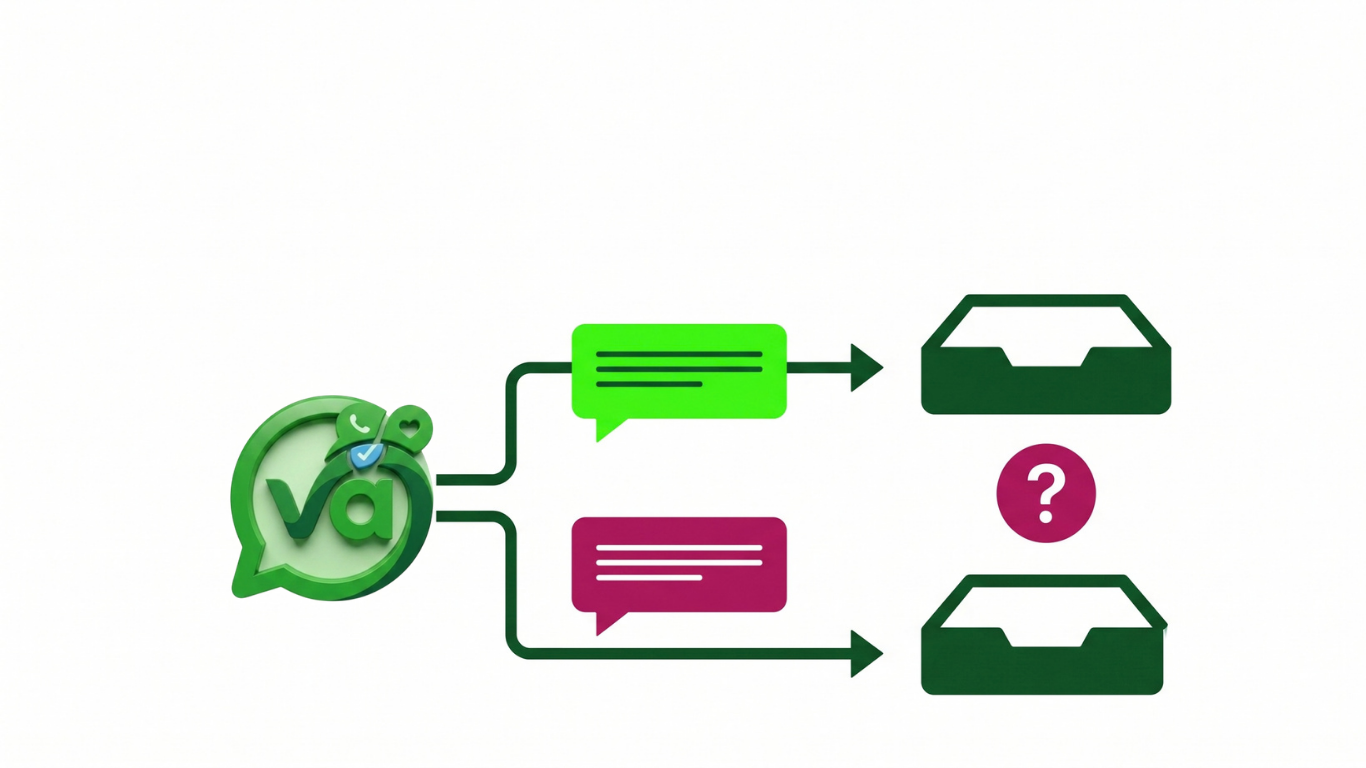
Picture a Tuesday afternoon. A customer named Priya fires off a WhatsApp message asking where her order is. Twenty minutes later, impatient, she opens your website chat and asks the same thing. Now two of your agents are typing a reply. Neither knows the other exists. Priya is about to get two answers, possibly contradictory, and your team just did double the work for a single question.
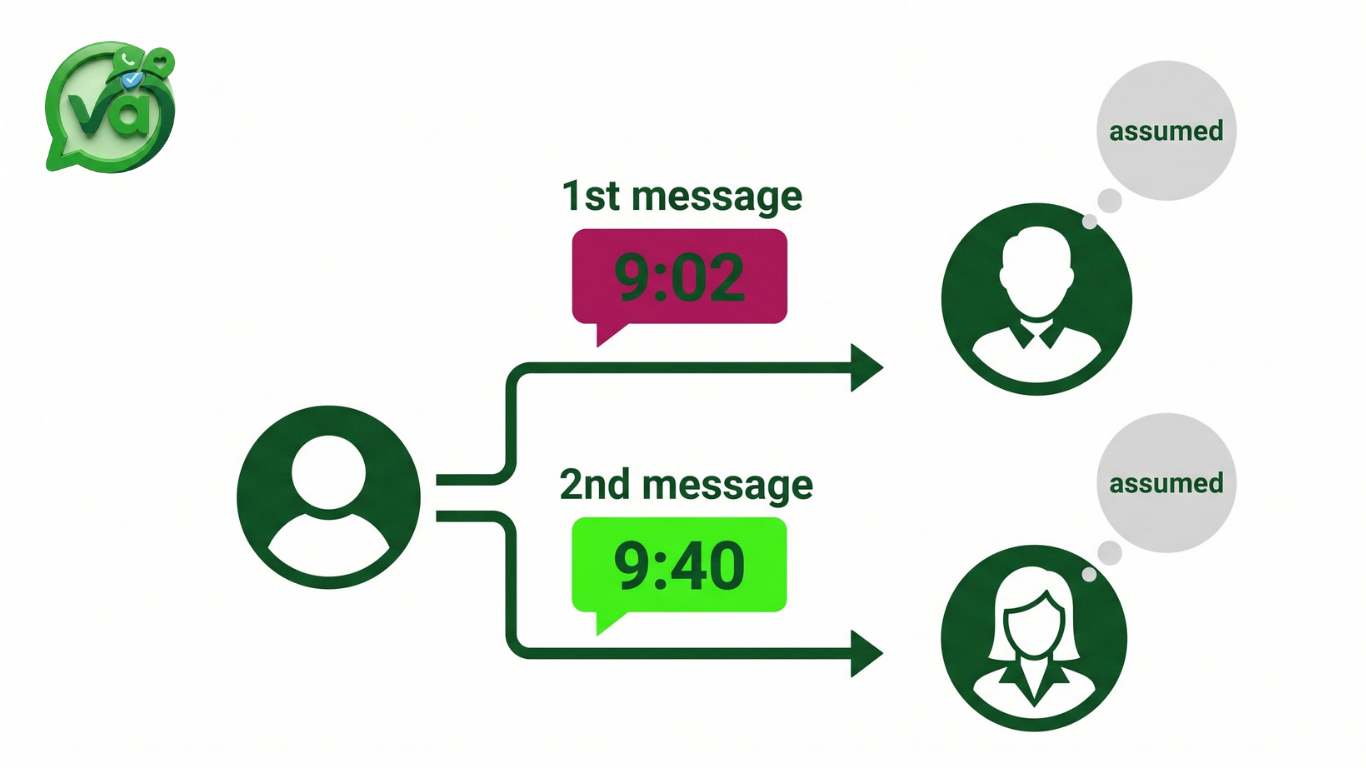
This happens more than most support leads want to admit. And it's exactly the kind of mess that business messaging quietly creates when nobody has decided who owns a customer conversation. Before you read on, scroll up and vote in the poll above. I'm genuinely curious where most teams land, because the gap between what people assume and what actually works is wide.
Why business messaging breaks when a customer uses two channels
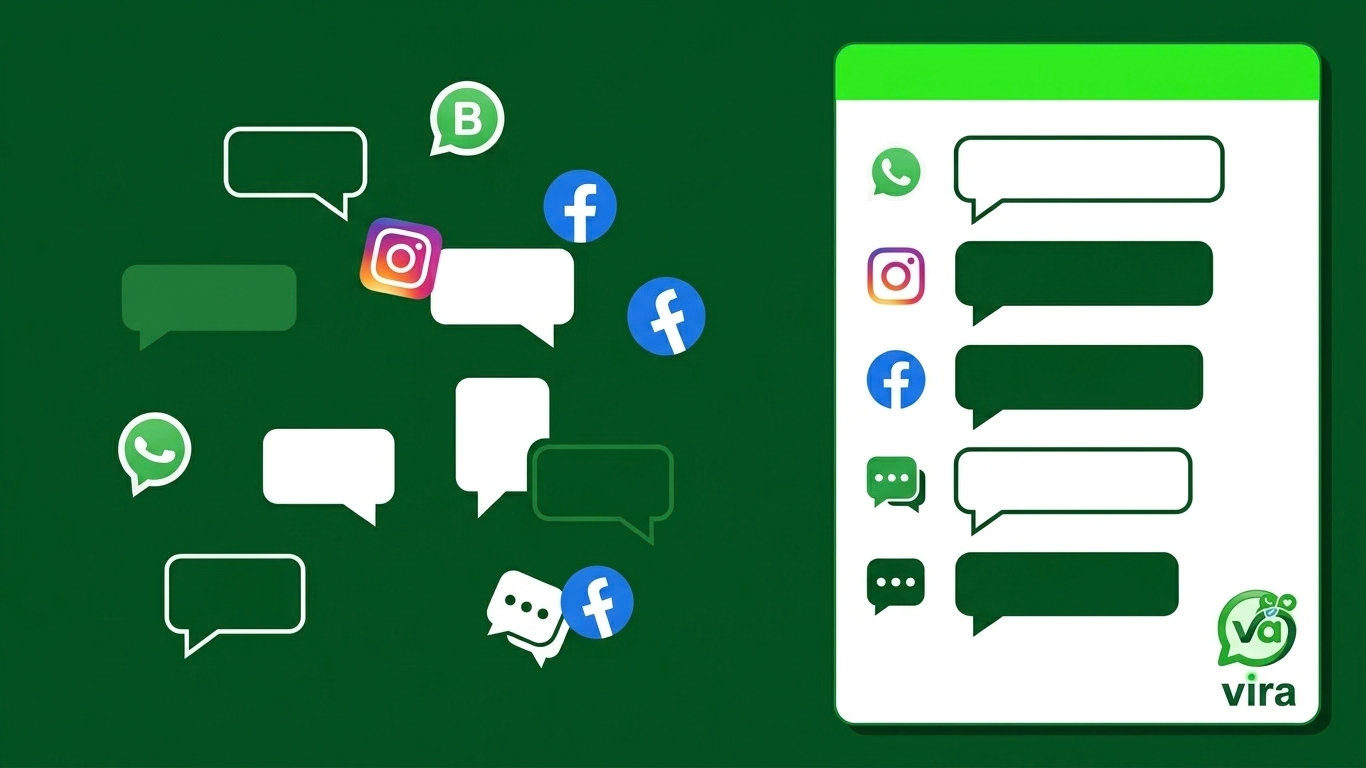
The core problem is that each channel feels like its own little kingdom. Email has its queue. WhatsApp has its queue. The web widget has its queue. Each one looks tidy on its own. The trouble starts when the same person crosses between them, because the human on the other end doesn't think in channels. They think, "I asked a question, somebody should answer it."
When your tools treat the WhatsApp Priya and the web-chat Priya as two separate tickets, you get the double-reply problem. You also get the opposite failure, where both agents assume the other has it handled and nobody replies at all. Either way, the customer loses trust, and your team loses time arguing over whose job it was.
I've watched teams try to patch this with Slack messages ("hey, is anyone on the Priya thing?"), colour-coded spreadsheets, and sheer good luck. None of that scales past about five agents. The fix isn't more hustle. It's a clear rule for ownership that everyone actually follows.
The myths that keep teams stuck
Let's go through the stories support teams tell themselves. Some sound reasonable. Most fall apart the second traffic picks up.
Myth: Whoever replies first owns it.
This feels fair and fast. In practice it rewards speed over context. The agent who grabbed the WhatsApp message first might know nothing about the refund that Priya discussed over email last week. Fastest hand on the keyboard is not the same as best person for the job.
Myth: The channel owns the conversation.
Some teams assign ownership to whoever runs each channel. The WhatsApp person handles all WhatsApp, the email person handles all email. Clean on paper. But Priya's issue didn't stay on one channel, so now her single problem is split across two owners who have to coordinate. You've turned one conversation into two half-conversations.
Myth: The customer decides by picking a channel.
No. The customer is not managing your workflow. They message wherever is convenient in the moment. Expecting them to stay on one channel so your routing stays simple is a bit like expecting a guest to use the same door every time so you don't have to unlock two. It's your job to make the doors connect.
Myth: A manager will catch the overlaps.
Managers are busy. By the time a lead notices a duplicate thread, both agents have already replied and the customer is confused. Ownership can't depend on someone watching everything in real time. It has to be built in.
The facts: what ownership should actually mean
Here's where I'll plant a flag. Good business messaging ties ownership to the person, not the channel and not the ticket.
When Priya messages anywhere, every one of her threads should collapse into a single customer conversation with a single owner. That owner holds it from first message to resolution, no matter how many channels she bounces between. If she starts on WhatsApp and jumps to the web widget, the same agent sees both, in order, in one view.
A few principles make this work in real life:
One contact, one owner. Match conversations to the human, usually by phone number or email, so the system knows WhatsApp-Priya and web-Priya are the same person.
Ownership is sticky but transferable. The first agent to pick it up keeps it, but they can hand it off cleanly when it needs a specialist or when their shift ends. The handoff is logged, so nothing gets dropped.
Everyone can see who owns what. No guessing. An agent should know at a glance whether a conversation is theirs, taken, or free to grab.
That third point is where team accountability lives or dies. When ownership is visible, people stop stepping on each other. When it's hidden, you're back to Slack pings and crossed wires.
Making it real with a unified inbox
The reason this ownership model felt impossible for years is that the tooling wasn't there. You genuinely couldn't see WhatsApp and web chat and email in one place, so of course they got owned separately.
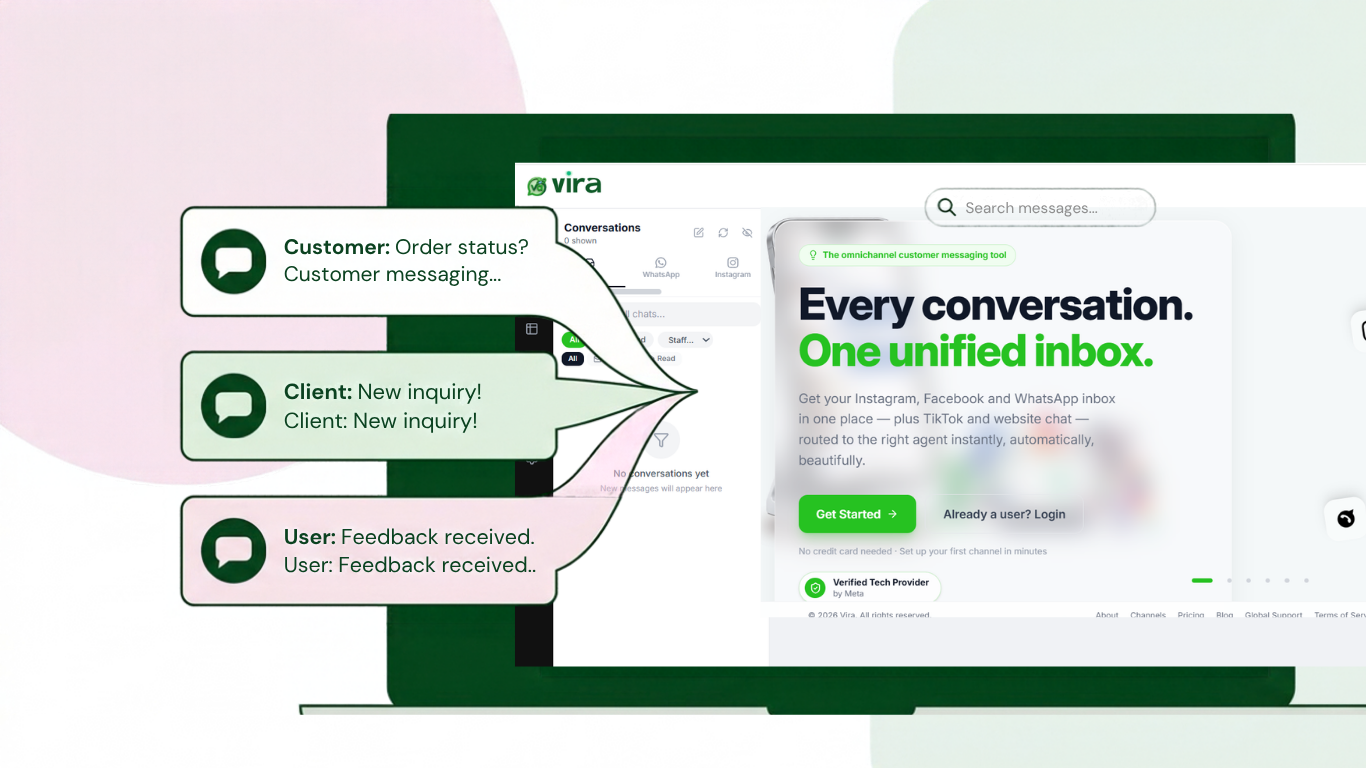
That's changed. A proper unified inbox pulls every channel into one thread per person. Priya's WhatsApp order question and her web-chat follow-up sit in the same conversation, assigned to one agent, with the full history right there. The agent who replies already knows what she asked an hour ago on a different channel.
For WhatsApp specifically, this depends on connecting through the official platform rather than scraping a phone app. If you want the technical grounding, the WhatsApp Business Platform documentation spells out how the API handles message threading and contact identity, which is what makes reliable one-person-one-conversation routing possible in the first place.
Once that foundation is in place, assignment rules do the heavy lifting. New conversation from a known contact? Route it to whoever already owns that contact's open thread. Brand new person? Drop it in the shared pool for the next available agent to claim. Simple, and it holds up at volume.
How to settle ownership on your team this week
You don't need a six-month project to fix this. You need a decision and a tool that respects it. Here's roughly how I'd run it.
Start by writing down your ownership rule in one sentence. Something like: "The first agent to respond owns the whole conversation across every channel until it's resolved or formally handed off." Say it out loud in your next team meeting so there's no ambiguity.
Then make the rule enforceable, not aspirational. If your current setup can't show an agent that a conversation already has an owner, the rule is just a wish. This is the moment to look at whether your channels are actually unified or just sitting in separate tabs pretending to be a system.
Finally, measure the thing that matters: duplicate replies and dropped threads. If both numbers trend toward zero over a month, your ownership model is working. If they don't, the rule is being ignored or the tooling is fighting you.
A quick gut check for where you stand:
Can an agent tell, in under three seconds, whether a message is theirs to handle?
When a customer switches channels mid-issue, does the conversation stay with one person?
When someone's out sick, is there an obvious way to reassign their open chats?
If you answered no to any of these, that's your weak spot, and it's probably where your worst customer experiences are leaking out.
The point most teams miss
Ownership isn't really about who gets credit. It's about making sure a customer never has to repeat themselves and never gets two different answers to one question. Get that right and the credit sorts itself out, because the person who owned the chat did the whole job.
Business messaging will keep getting more fragmented, not less. People will add channels, switch between them, and expect you to keep up. The teams that handle it well aren't the ones with the most agents. They're the ones who decided, clearly, who owns a customer conversation, and then gave their people the tools to see it.
So, where does your team actually fall on this? Vote in the poll above, and if the result surprises you, that's probably a conversation worth having with your crew.