
November 13, 2026 · CHARITY
Customer Service Chatbot: A Quick Readiness Quiz
Customer service chatbot readiness quiz: answer five questions to see if a greeting and menu would help your team, then try Vira free for 14 days.
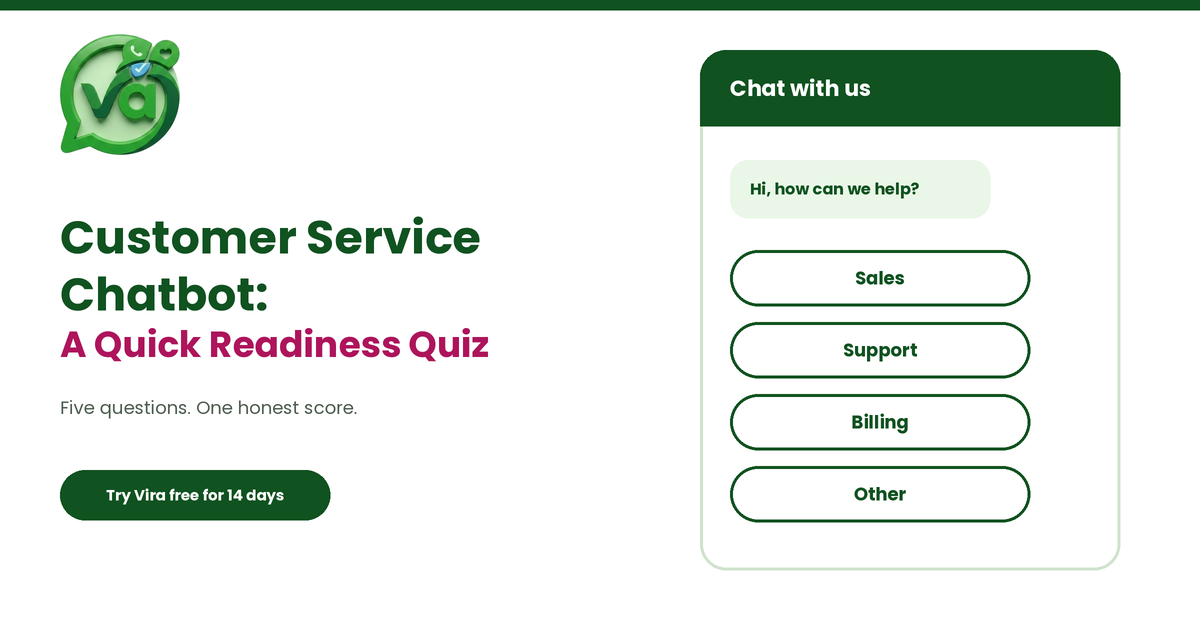
Customer service often starts with the same few questions, long before an agent opens the chat. "Are you open?" "Do you ship to my area?" "How much is it?" Your team sees those same lines all day, and someone types out the same answer for the hundredth time. It feels productive. It isn't.
That repetition is quietly costing you. Not in some dramatic way, but in minutes that add up, and in visitors who close the tab before anyone says hello. Before you decide whether a chatbot belongs on your site, it helps to know if you actually need one. So I built you a short quiz. Five questions, honest answers, and a clear result at the end.
What is a customer service chatbot and when does a business need one?
A customer service chatbot greets each customer and shows a menu of options before an agent opens the chat. It handles the first step of a conversation, such as choosing a topic. A business needs one when many messages open with the same few questions.
Think of it as the person who meets you at the door of a shop and points you toward the right aisle. Nobody expects that greeter to ring up your purchase. They just make sure you don't wander out confused. A chatbot does the same job in a chat window: it welcomes the visitor, offers a short list of choices, and gets them pointed in the right direction so your agents can pick up a conversation that already has context.
The greeting and the menu both come before an agent opens the chat. That timing is the whole point. And the five quiz questions below double as a checklist, so even if you skip the scoring, you'll walk away knowing where your gaps are.
Why the same first questions drain your team
Here's the pattern I see over and over with support teams. The first message in a chat is almost never the real question. It's "hi," or "are you there," or one of three predictable openers. An agent reads it, types a reply, and waits. Multiply that by every conversation in a day and you've handed a big chunk of your team's hours to greetings.
That's expensive in a way that doesn't show up on any invoice. An agent who spends the first two minutes of every chat on introductions and topic-sorting is an agent who isn't solving the hard stuff. And while they're doing that sorting, someone else is waiting in the queue.
The worse cost is the one you never see. A visitor lands on your site at 9pm, when nobody's online. They have one question. There's no reply, no sign that anyone's there, so they leave and buy from a competitor who answered in ten seconds. That lead didn't bounce because your product was wrong. It cooled because nobody said hello fast enough.
For small businesses especially, that silence adds up. If you're losing even five of those visitors a week, and a decent lead is worth a few thousand in revenue, the math gets painful quickly. A single missed conversation can be worth more than a month of chatbot setup.
How a greeting fixes the leak
This is where a chatbot earns its keep. Vira's chatbot greets each customer and shows a menu before an agent opens the chat, so the first reply is instant, even at midnight. The visitor picks a topic, and the conversation is already sorted by the time a human steps in.
Because it all lives inside the same unified inbox as your routing and lead tracking, nothing gets dropped on the floor. The chatbot handles the opening, the routing sends the chat to the right person, and the lead is logged whether an agent was awake or not. Your customer messaging across channels stops being a scramble and starts behaving like a system.
That's the difference between answering fast and answering first. Speed keeps people in the conversation. A tidy handoff keeps your agents sane.
The customer service chatbot readiness quiz
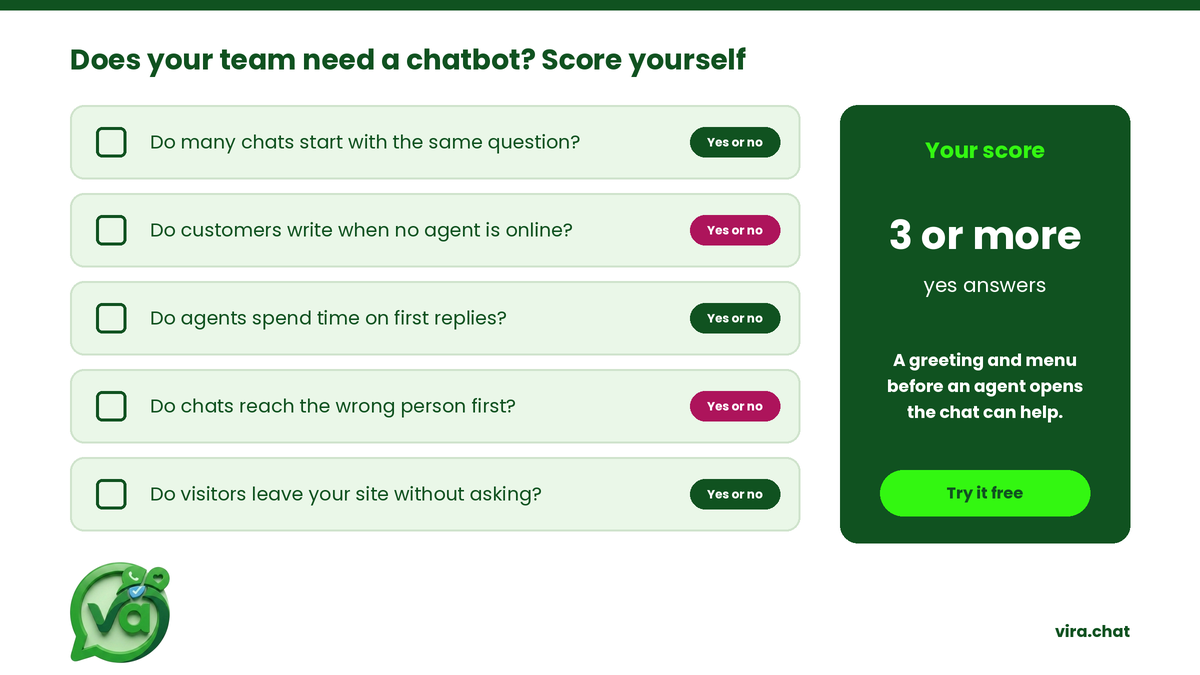
Answer each one with a simple yes or no. Three or more yes answers means a greeting and menu would genuinely help your team.
Do many of your chats start with the same question? If you can predict the first line before you read it, that's a yes.
Do customers write in when no agent is online? Check your late-night and weekend timestamps. Those messages are votes for a greeting that never sleeps.
Do agents spend time on first replies instead of real answers? If the opening exchange eats a couple of minutes before the actual issue comes up, count it.
Do chats reach the wrong person first, then get passed around? Misrouted conversations waste time and annoy the customer twice.
Do visitors leave your site without asking anything at all? This is the quiet one. High traffic, few chats started, usually means people didn't feel invited to speak.
Now add up your yes answers.
0 to 2 yes: You're probably managing fine with live agents for now. Keep an eye on question two, because off-hours volume tends to creep up.
3 or 4 yes: A greeting and menu would clear real friction. You'd buy back agent time and catch the chats you're currently missing.
5 yes: You're leaking leads daily. A chatbot at the front of every conversation isn't a nice-to-have here, it's overdue.
Be honest with the scoring. The temptation is to say "we handle it," and sure, you do, but handling something manually and handling it well aren't the same thing. If three of those questions stung a little, that's your answer.
What good looks like in practice
Let me paint the before and after. Before: a visitor types "hi," waits forty seconds, gets "Hi, how can I help?", explains their issue, then waits again while the agent figures out who should actually deal with it. Three minutes gone, and the visitor's patience is thinner than when they arrived.
After: the visitor opens the chat and is greeted instantly with a short menu. They tap "billing question." The conversation routes straight to the right agent, who sees the topic already attached. The human's first message is useful, not a formality. The whole thing feels fast because it is.
You don't need a robot that pretends to be a person or answers complicated questions on its own. You need a well-made front door. If you want to understand the difference between a helpful bot and an annoying one, the Nielsen Norman Group's research on chatbot usability is a solid, no-nonsense read, and it isn't trying to sell you anything.
Where it all lives
The reason this works is that the greeting isn't a bolted-on widget sitting apart from everything else. Vira.chat is a unified inbox for WhatsApp, Instagram, Facebook, TikTok and website chat, built by Fansoft Solutions. The chatbot, the routing, and the lead tracking share one view, so a conversation that starts on Instagram and a conversation that starts on your website both land in the same place with the same context.
That matters more than people expect. Scattered tools mean scattered attention, and scattered attention is how leads slip through. Pulling your customer messaging into one inbox is half the battle; letting a chatbot handle the openings is the other half.
FAQ
What does a customer service chatbot do?
It greets each visitor, shows a short menu of topics, and handles the opening step of the conversation. It sorts people by what they need, then hands the chat to a human with that context already attached, so the agent starts solving instead of sorting.
Does a chatbot replace my support agents?
No, and it shouldn't try to. The chatbot covers the predictable first step: the greeting, the topic choice, the instant reply when nobody's online. Your agents still handle every real conversation. The bot just makes sure none of them start cold or get missed.
How long does it take to set up?
Most teams get a basic greeting and menu running in an afternoon. You can start simple, watch which topics people pick, and refine the menu from there. There's no need to map out every branch before you go live.
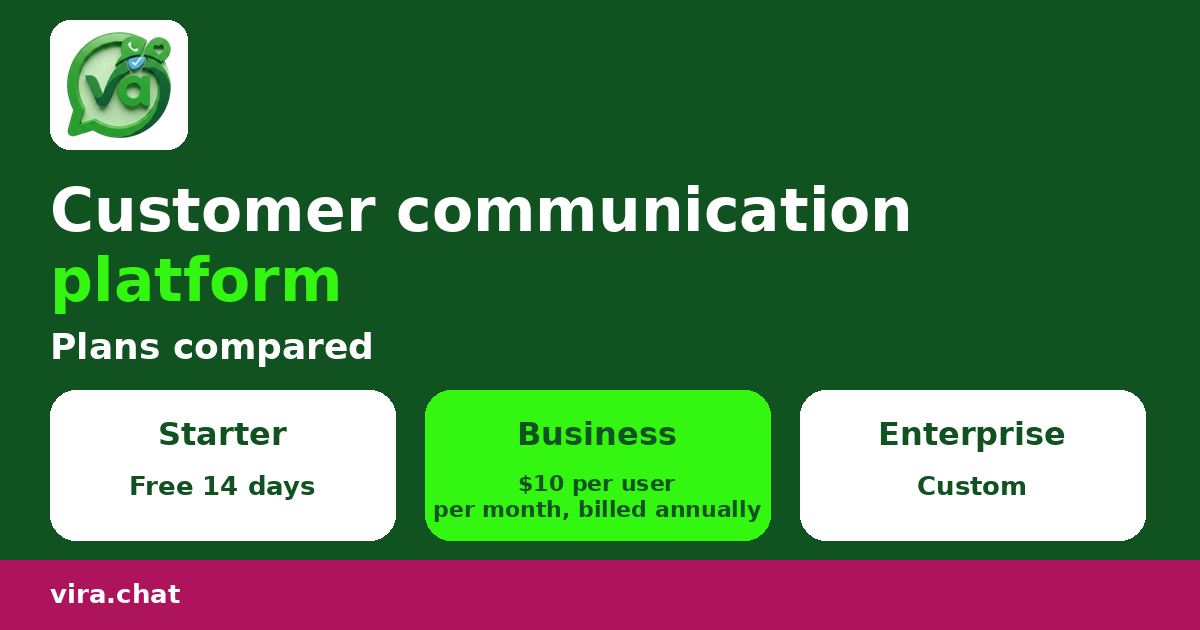
Better customer service starts with a greeting. Register for the free 14 day trial.
Run the quiz once a quarter if you want. Teams change, traffic patterns shift, and a "no" today can quietly turn into three "yes" answers by next season. The goal isn't to automate your way out of talking to customers. It's to make sure the conversation actually begins.